
Introduction
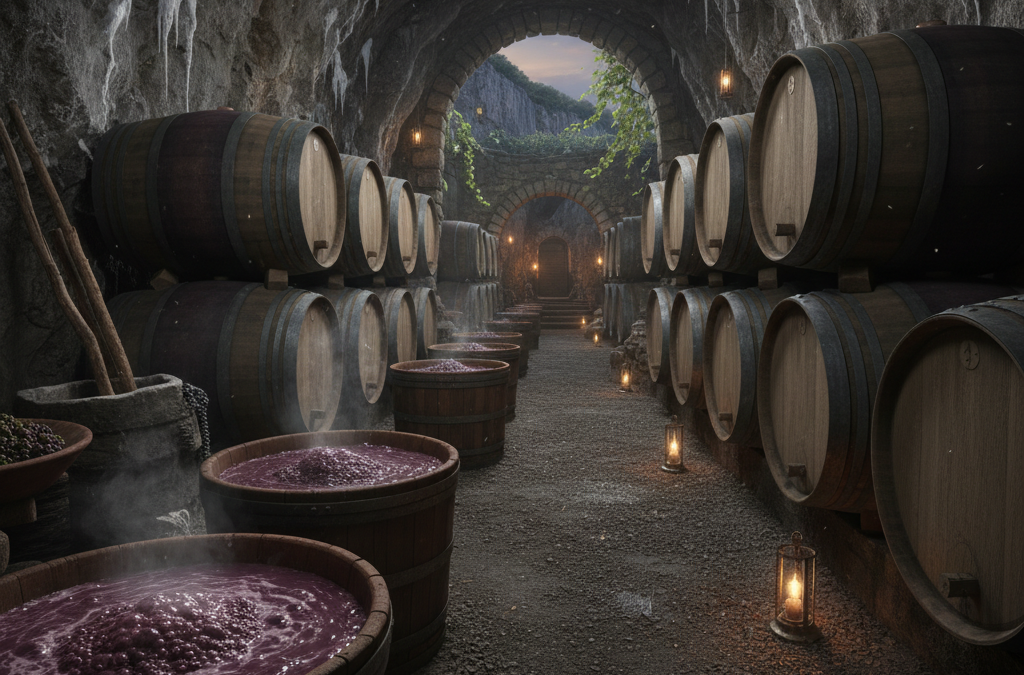
Standing in the cool, damp embrace of a wine cave, I’m reminded of my first encounter with cave wine fermentation science years ago. The dim light from my lantern cast shadows across rough-hewn walls, and I felt the ancient wisdom of winemaking envelop me. That moment sparked a curiosity about how these natural cellars could influence the wine fermentation process so profoundly—a question that has shaped my understanding of winemaking ever since.
TL;DR / Key Takeaways
- Cave environments provide naturally stable conditions ideal for the wine fermentation process, with consistent temperature and humidity levels
- Underground caves house functional fermentation and aging areas in modern wineries, combining traditional methods with contemporary understanding
- The unique microbial ecosystem within caves contributes distinctive character to wines that surface-level fermentation cannot replicate
- Cave fermentation represents a sustainable approach to winemaking, utilizing natural temperature regulation without artificial cooling systems
- Modern wine caves range from small operations to expansive facilities, demonstrating the scalability of this time-honored technique
The wine fermentation process in caves isn’t just romantic tradition—it’s a practical application of natural science that winemakers have refined over centuries. From Napa Valley’s pioneering cave construction to Sonoma County’s extensive cave systems, these underground spaces offer conditions that are difficult to replicate above ground.
What makes cave fermentation particularly fascinating is how it marries old-world techniques with modern precision. While contemporary winemaking embraces smart tanks with sensors to monitor fermentation variables, caves provide these benefits organically through their inherent environmental stability.
In this guide, we’ll explore the scientific processes that make cave fermentation so effective, from the unique environmental conditions to the surprising role of cave-dwelling microbes. Whether you’re a wine enthusiast or a curious learner, understanding these underground wonders will deepen your appreciation for every glass. For those interested in exploring these fascinating spaces firsthand, check out our guide to American Wine Caves for touring opportunities.
Sources
- 20 Winery Cave Tours & Tastings in Napa Valley
- 12 Wine Caves You Can Visit in Sonoma County
- 20 Tech Innovations That Are Changing the Wine Industry
Sources
Table of Contents
- Introduction
- The Unique Environment of Caves
- The Microbial Ecosystem in Caves
- Benefits of Cave Fermentation
- Conclusion
- Frequently Asked Questions
Sources
The Unique Environment of Caves
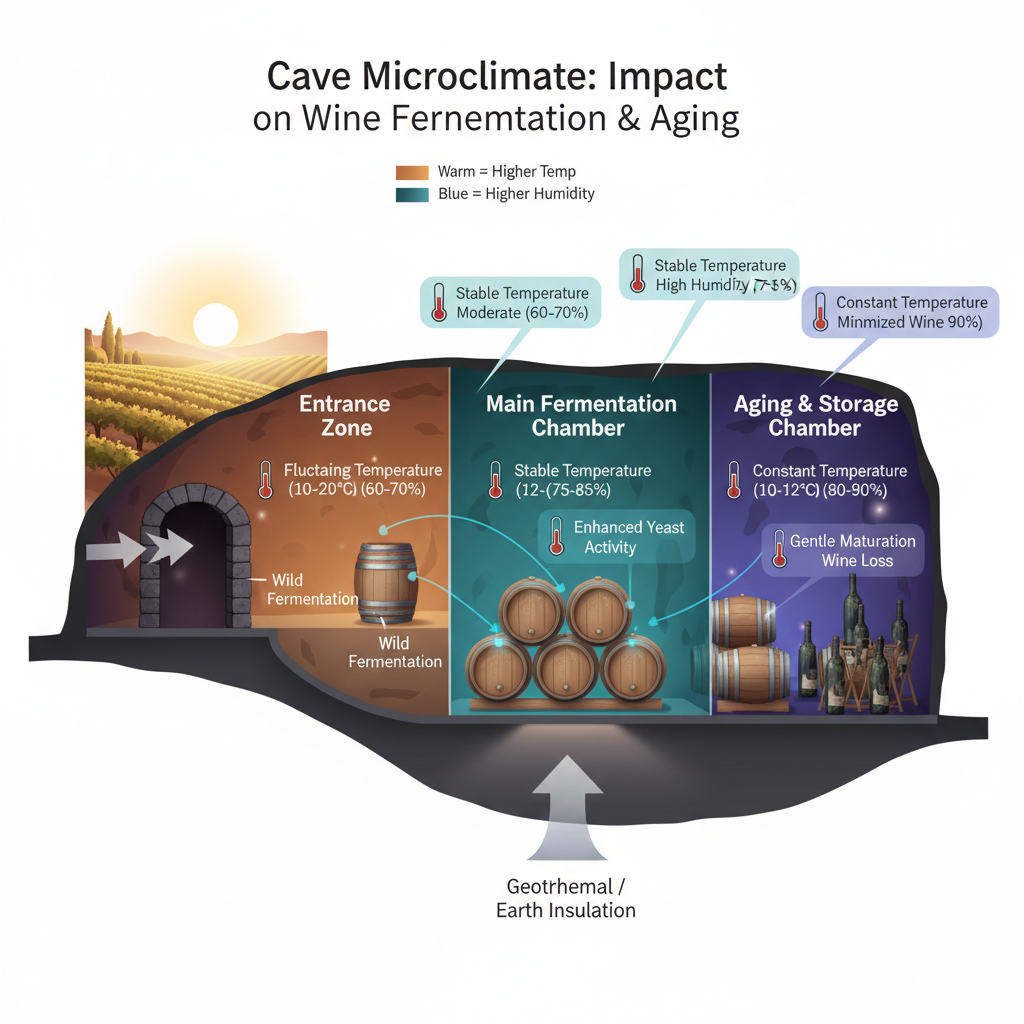
Caves offer winemakers a naturally controlled environment that’s difficult to replicate in conventional facilities. The underground setting provides consistent conditions that support the delicate wine fermentation process, creating an ideal space for both fermentation and aging.
The stable temperature found in caves plays a crucial role in developing wine character. Unlike surface-level facilities that experience temperature fluctuations throughout the day and across seasons, caves maintain remarkably steady conditions. This consistency allows for slow, even fermentation that enhances complexity in the final product.
Temperature and Humidity Control
The natural insulation provided by earth and rock creates a buffer against external temperature swings. This stable environment means winemakers can rely on nature’s design rather than energy-intensive cooling systems. The underground location naturally maintains cooler temperatures ideal for controlled fermentation.
High humidity levels in caves serve an equally important function. The moisture-rich air prevents excessive evaporation from barrels, preserving both wine volume and the volatile aromatic compounds that contribute to a wine’s bouquet. This natural humidity eliminates the need for artificial humidification systems common in above-ground cellars.
Historical and Modern Applications
Winemakers have recognized the advantages of cave environments for centuries. Modern wineries in regions like Sonoma County and Napa Valley continue this tradition, with some facilities featuring extensive underground cave systems for fermentation and aging operations. These spaces blend historical wisdom with contemporary winemaking techniques.
The environmental benefits extend beyond wine quality. By utilizing natural temperature regulation, cave facilities reduce energy consumption compared to climate-controlled surface buildings. This approach aligns with growing interest in sustainable wine production practices throughout the industry.
Sources
- Gravity-Flow Wineries are Crushing It In Sonoma County
- 20 Winery Cave Tours & Tastings in Napa Valley
- Sustainable Wine Production & Industry Trends in 2025
Sources
- Gravity-Flow Wineries are Crushing It In Sonoma County — Explains the significance of cave conditions in wine fermentation.
The Microbial Ecosystem in Caves
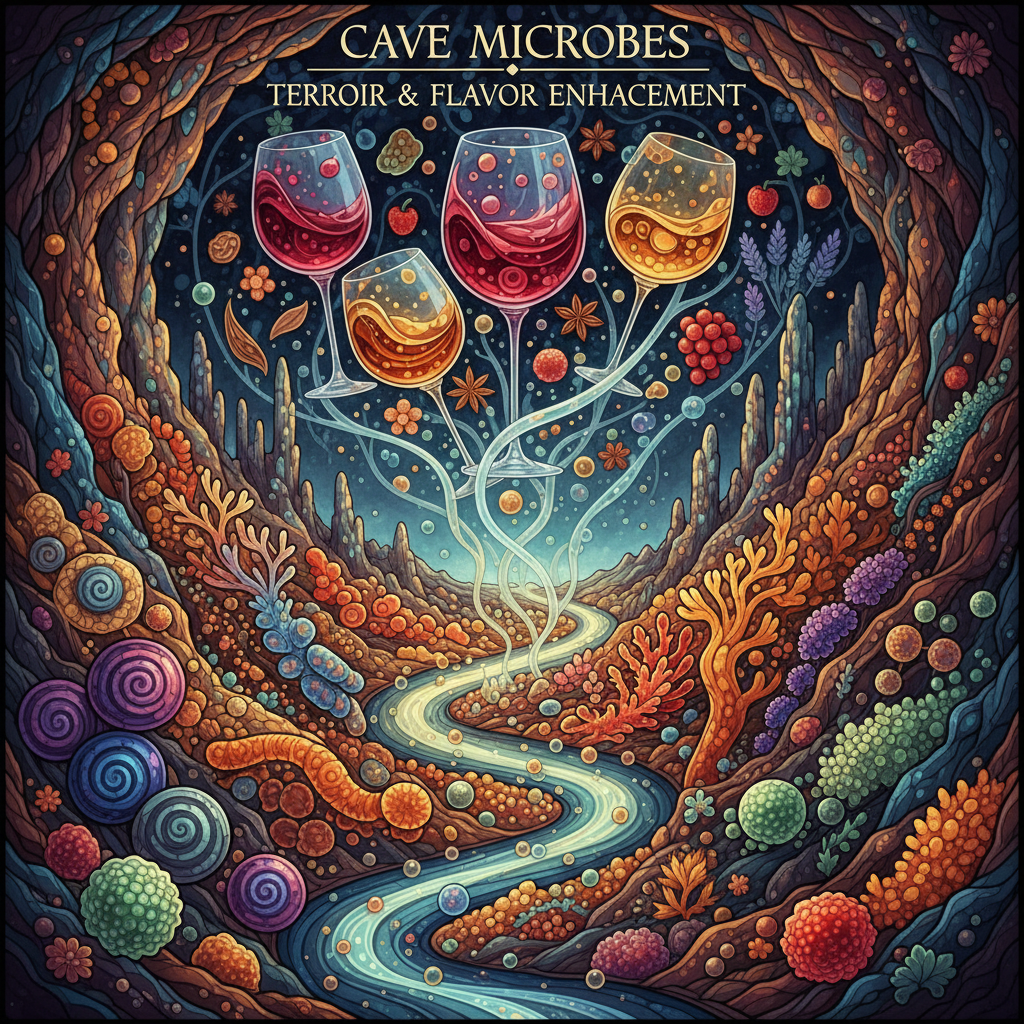
The hidden world beneath the earth’s surface hosts more than just ideal temperature and humidity—it harbors unique microbial communities that can profoundly influence the wine fermentation process. These naturally occurring microorganisms interact with fermenting wine in ways that winemakers are only beginning to fully understand and appreciate.
Cave environments create distinct microbial ecosystems that differ significantly from surface-level fermentation facilities. The stable conditions and isolation of underground spaces allow specialized microbes to thrive, contributing subtle complexity to wines aged or fermented in these environments.
Natural Yeast Populations
Caves often harbor indigenous yeast strains that have adapted to the specific underground environment over time. These wild yeasts can contribute unique flavor profiles when they interact with fermenting wine, adding layers of character that commercial yeast strains may not provide.
The cool, stable temperatures in caves encourage slower fermentation rates, which allows these native microorganisms more time to influence the developing wine. This extended contact period can enhance aromatic complexity and create distinctive terroir-driven characteristics.
Bacterial Contributions
Beyond yeast, beneficial bacteria present in cave environments can play important roles in wine development. These microorganisms may contribute to malolactic fermentation and other secondary processes that soften acidity and add textural complexity to the finished wine.
The winemaking industry continues to explore different fermentation methods and vessels, with renewed interest in traditional techniques that leverage natural microbial populations. Modern winemakers are experimenting with ways to harness cave microbiomes while maintaining quality control and consistency.
Balancing Tradition and Innovation
While cave fermentation offers unique microbial benefits, successful winemakers balance traditional methods with modern monitoring technology. Smart tanks equipped with sensors can now track fermentation progress even in cave environments, allowing vintners to maintain optimal conditions while still benefiting from the cave’s natural microbial ecosystem.
This marriage of ancient wisdom and contemporary science represents the evolution of winemaking—respecting the contributions of natural cave environments while ensuring consistent, high-quality results.
Sources
- Wine Industry Trends for 2024 – The Grape Grind
- 20 Tech Innovations That Are Changing the Wine Industry
Sources
- 10 wine caves around California that offer unique tours for visitors — Discusses the role of cave microbes and their contribution to flavor enhancement.
Benefits of Cave Fermentation
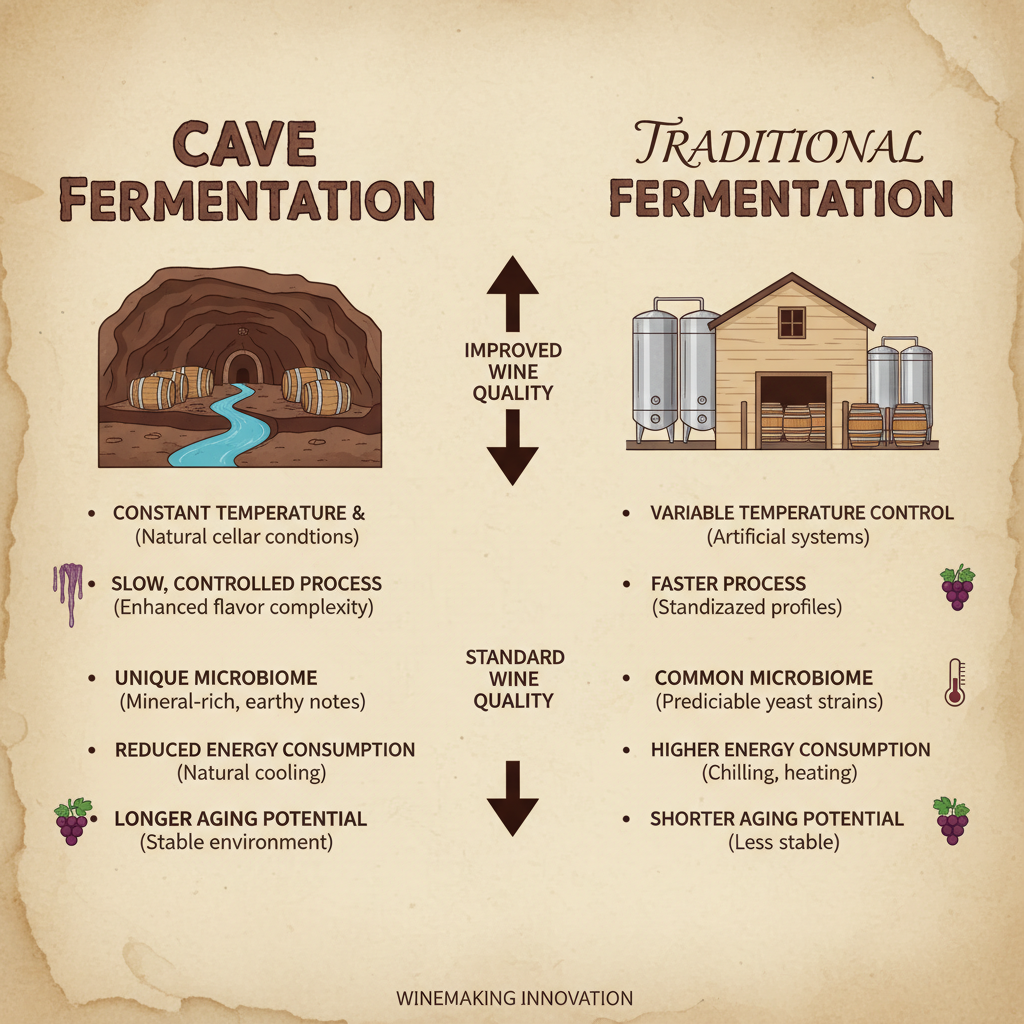
Cave fermentation offers winemakers a unique set of advantages that have been recognized for centuries and continue to gain appreciation in modern winemaking. These underground environments provide natural conditions that can enhance both the fermentation process and the final product.
Natural Temperature Control
One of the primary benefits of cave fermentation is the naturally stable temperature environment. Caves maintain consistent cool temperatures year-round, which is ideal for the slow, controlled fermentation that produces complex flavor profiles. This natural climate control reduces the need for energy-intensive cooling systems, making cave fermentation an environmentally sustainable choice.
The steady temperature prevents the rapid fermentation that can occur in warmer environments, allowing the wine to develop more nuanced characteristics. This slower process gives yeast more time to interact with the grape sugars, resulting in wines with greater depth and complexity.
Humidity and Preservation
Caves naturally maintain high humidity levels, which help prevent evaporation during the fermentation and aging process. This preservation of volume means less wine is lost to evaporation, and the volatile aromatic compounds that contribute to a wine’s bouquet are better retained.
The humid environment also benefits barrel aging, as it prevents the wood from drying out and maintains the integrity of the seal between barrel and wine. This creates optimal conditions for the slow exchange of oxygen that contributes to a wine’s maturation.
Energy Efficiency and Sustainability
Modern wineries are increasingly recognizing the sustainability benefits of cave fermentation. By utilizing natural underground conditions, winemakers can significantly reduce their energy consumption compared to temperature-controlled surface facilities. This aligns with broader eco-friendly wine tools and sustainable winemaking practices.
The reduced need for mechanical cooling and climate control systems not only lowers operational costs but also minimizes the environmental footprint of wine production. This makes cave fermentation an attractive option for wineries committed to sustainable practices.
Historical Authenticity and Tourism Appeal
Beyond the practical benefits, cave fermentation offers a connection to traditional winemaking methods that appeals to both winemakers and wine enthusiasts. Many wineries with cave systems have developed them into tourist attractions, offering unique tasting experiences in atmospheric underground settings.
Wineries like B. Wise Vineyards in Sonoma Valley have created functional caves that house fermentation and aging areas while also serving as distinctive visitor destinations. The trend has grown significantly, with cave systems becoming increasingly popular since the 1990s in regions like Paso Robles and beyond.
Sources
- Best Wine Cave – B. Wise Vineyards in Sonoma Valley
- The Best Wine Caves in Paso Robles
- 12 Wine Caves You Can Visit in Sonoma County
Sources
- Best Wine Cave – B. Wise Vineyards in Sonoma Valley — Details the advantages of fermenting wine in caves.
Conclusion
The wine fermentation process takes on a unique character when conducted in the timeless environment of caves. Throughout this exploration, we’ve seen how the stable temperatures and humidity levels create ideal conditions for slow, even fermentation that enhances complexity and preserves delicate aromatic compounds. The natural microbial ecosystems present in cave environments add layers of character that surface-level fermentation simply cannot replicate.
Modern wineries across California’s wine regions continue to embrace cave fermentation, recognizing its practical advantages alongside its romantic appeal. From energy efficiency to the preservation of wine volume and quality, the benefits extend far beyond tradition.
As I reflect on my own journey into cave wine fermentation science, I’m reminded that sometimes the old ways, supported by modern understanding, truly hold the key to creating something exceptional. The cool, damp embrace of these natural cellars continues to shape wines with depth and nuance that honor centuries of winemaking wisdom while meeting today’s quality standards.
Whether you’re a winemaker considering cave fermentation or an enthusiast exploring the craft, understanding these underground processes deepens appreciation for every bottle that emerges from these remarkable spaces.
Sources
Frequently Asked Questions
What is the wine fermentation process?
The wine fermentation process is the biochemical transformation of grape sugars into alcohol and carbon dioxide by yeast. This essential winemaking stage develops the wine’s alcohol content, flavor profile, and aromatic characteristics. Temperature, yeast strain, and environmental conditions all influence the final outcome.
Why are caves used for wine fermentation?
Caves provide naturally stable temperature and humidity conditions that benefit the wine fermentation process. These underground environments maintain consistent cool temperatures and high humidity levels, which help preserve wine volume and enhance the development of complex flavors and aromas during fermentation and aging.
How do cave conditions differ from traditional winery environments?
Cave environments offer natural temperature regulation without the energy costs of climate control systems. The underground setting creates a unique microbial ecosystem and stable humidity that can contribute distinct characteristics to the wine. Modern wineries like B. Wise Vineyards house their fermentation and aging areas in functional underground caves.
Can I visit wine caves during tours?
Many wineries across California offer cave tours and tastings. Regions like Napa Valley, Sonoma County, and Paso Robles feature wineries with extensive cave systems. These tours provide unique opportunities to see the wine fermentation process in traditional underground settings.
For more insights on planning your wine country experience, explore our guide to winery etiquette tips: 7 essential surprising guidelines.
What makes cave fermentation sustainable?
Cave fermentation reduces energy consumption by utilizing natural temperature regulation instead of mechanical cooling systems. The stable underground environment minimizes the need for climate control, making it an eco-friendly approach to winemaking that aligns with modern sustainability trends in wine production.
Sources
- Best Wine Cave – B. Wise Vineyards in Sonoma Valley
- 20 Winery Cave Tours & Tastings in Napa Valley
- The Best Wine Caves in Paso Robles
- 12 Wine Caves You Can Visit in Sonoma County