
Introduction
TL;DR
- Wine tasting etiquette enhances your experience and shows respect for the winery and its craft
- Understanding proper tasting room behavior creates a welcoming atmosphere for all guests
- Following winery etiquette tips can lead to better service and personalized recommendations
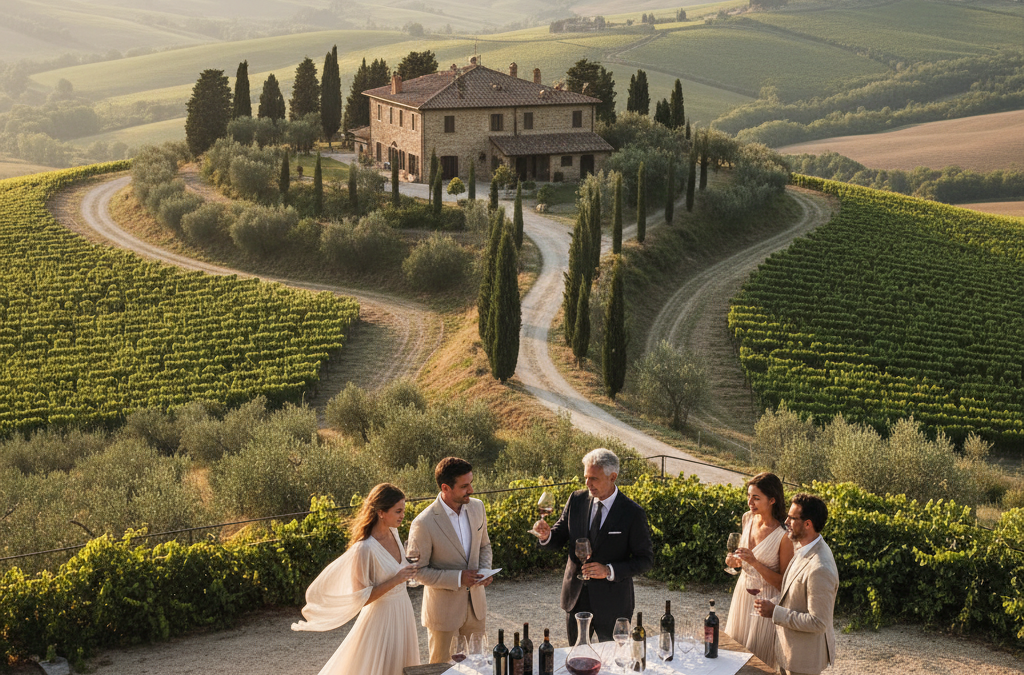
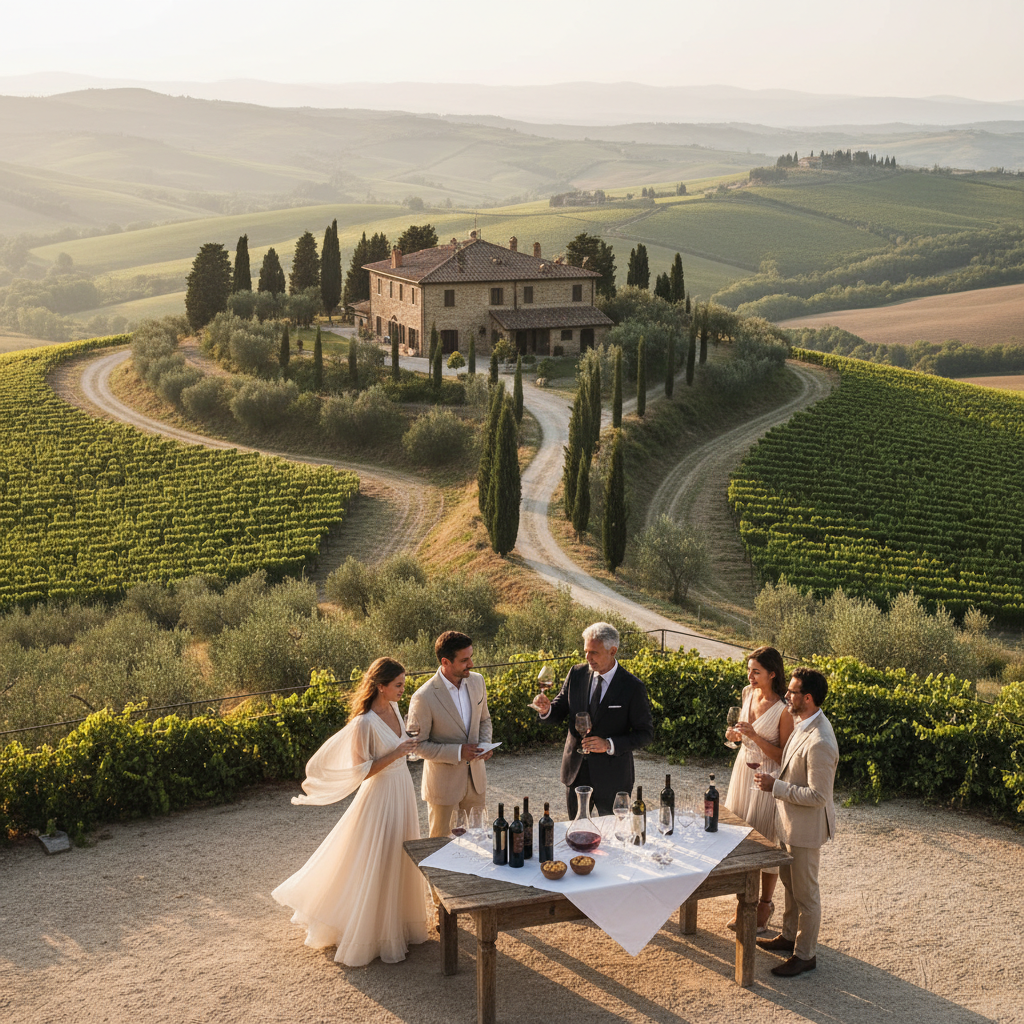
Stepping into a secluded winery nestled in the rolling hills of Tuscany, I was immediately captivated by the rustic charm and the promise of unique flavors waiting to be discovered. This was one of those hidden gem wineries where proper etiquette wasn’t just a formality—it was an art that deepened the entire experience.
Wine tasting etiquette is crucial for creating a pleasant experience that benefits everyone involved. It reflects respect for the wine itself, the winery’s dedication to their craft, and your fellow tasters who are sharing the moment. When you understand and practice good tasting room behavior, you’re not just following rules—you’re opening doors to richer interactions and deeper appreciation.
Many wineries offer educational tours that emphasize the importance of etiquette, recognizing that visitors who follow these guidelines often receive better service and more thoughtful recommendations. Good winery etiquette tips can transform a simple tasting into an unforgettable journey through flavors, stories, and connections.
Whether you’re visiting a renowned estate or discovering a hidden gem, understanding proper conduct enhances your knowledge and enjoyment of wine. This guide will walk you through everything you need to know to make the most of your winery visits while honoring the traditions that make wine culture so special.
Ready to elevate your wine tasting experiences? Let’s explore the essential practices that will help you savor every sip with confidence and grace.
Sources
- Wine Tasting Etiquette — Provides an overview of proper etiquette during wine tastings.
Table of Contents
- Introduction
- Understanding Winery Etiquette
- Tasting Room Behavior
- Essential Tips for Tasting
- Common Mistakes to Avoid
- Conclusion
Understanding Winery Etiquette
Key Takeaways
- Winery etiquette encompasses behavior, dress code, and respectful interaction with staff
- Proper etiquette creates a welcoming environment for all guests and enhances your experience
- Following wine tasting protocols can lead to personalized recommendations and deeper insights
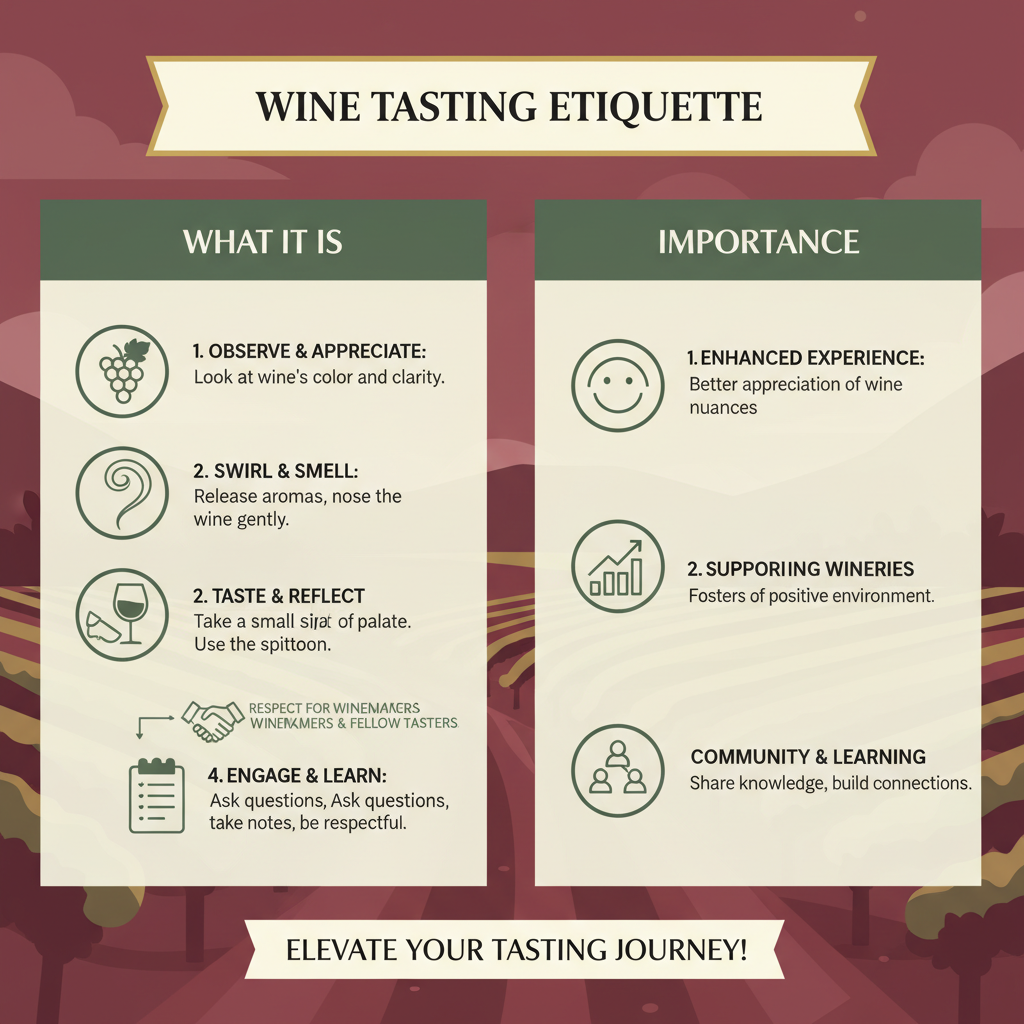
Winery etiquette is the set of unwritten rules and courteous behaviors that guide your conduct during a wine tasting visit. It encompasses everything from how you dress and arrive to how you interact with the staff and fellow guests. Understanding these social norms shows respect for the wine, the winemakers, and the other visitors sharing the experience with you.
The importance of proper tasting room behavior extends beyond simple politeness. When you demonstrate knowledge of wine tasting protocols, winery staff are more likely to share insider knowledge about their craft, recommend hidden gems from their collection, and create a more personalized experience for you. Dressing appropriately—typically smart casual attire—can influence the impression you make and set the tone for your visit.
Good etiquette also creates a welcoming environment that benefits everyone in the tasting room. When guests are mindful of their volume, respectful in their comments, and considerate of others’ space, the entire atmosphere becomes more relaxed and enjoyable. Engaging respectfully with staff opens doors to unique insights about the wines, the terroir, and the winemaking philosophy that you might otherwise miss.
Think of winery etiquette as your passport to deeper wine country experiences. The courtesies you extend—whether it’s arriving on time for your reservation, asking thoughtful questions, or expressing genuine appreciation for the wines—help build connections that can transform a simple tasting into a memorable encounter. For more guidance on mastering these social graces, explore our comprehensive guide to wine tasting etiquette.
Ultimately, understanding winery etiquette isn’t about memorizing rigid rules. It’s about approaching each visit with curiosity, respect, and an open mind—qualities that will serve you well whether you’re visiting a renowned estate or discovering a hidden gem tucked away in the countryside.
Sources
- The Rules of Winery Tasting-Room Etiquette — Explains the essential rules of behavior in a winery tasting room.
Tasting Room Behavior
Key Takeaways
- Arrive on time and respect your reservation slot
- Taste in moderation while being mindful of other guests
- Use respectful language and avoid negative comments about wines
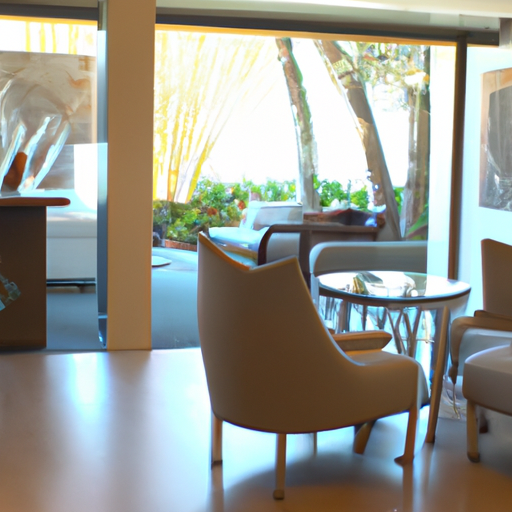
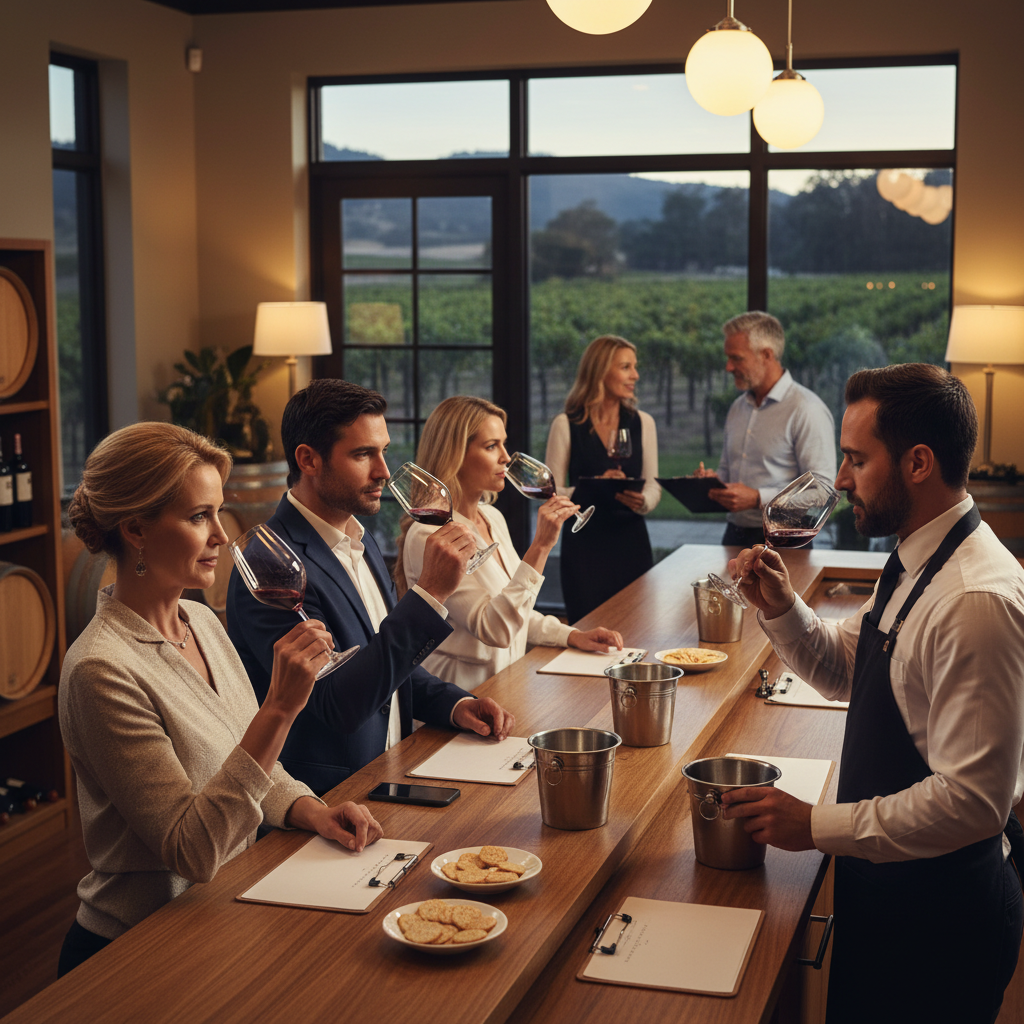
Walking into a tasting room is like entering someone’s home—your behavior sets the tone for everyone’s experience. The way you conduct yourself affects not only your own enjoyment but also the atmosphere for fellow wine enthusiasts and the winery staff who pour their passion into every glass.
Respecting Time and Reservations
Arriving on time shows respect for the winery’s schedule and other guests waiting for their turn. When you’re late, you may disrupt the carefully planned flow of a scheduled tasting session. Many wineries operate on tight schedules, especially smaller boutique operations, so punctuality matters.
If you’re running behind, a quick phone call can make all the difference. Most tasting room managers appreciate the courtesy and may be able to accommodate you without disrupting other guests’ experiences.
Mindful Tasting Practices
Tasting in moderation is essential for both your safety and your ability to appreciate the wines properly. When you overindulge, you lose the ability to distinguish subtle flavor notes and aromas that make each wine unique. Being mindful of your consumption also ensures you don’t inadvertently become disruptive to others.
Pace yourself throughout the tasting. Take time to savor each pour, and don’t hesitate to use the dump bucket—it’s there for a reason, and experienced tasters use it regularly.
Communication and Courtesy
Using appropriate language and maintaining a positive demeanor creates a welcoming environment for everyone. While you don’t have to love every wine you taste, avoid making loud, disparaging remarks that might offend the staff or other guests. Some visitors inadvertently create uncomfortable situations by criticizing wines too vocally.
Instead, focus on what you do enjoy about each wine. If something isn’t to your taste, simply move on to the next pour. Complimenting the winery staff when you discover something you love can create a positive atmosphere and often leads to more personalized recommendations.
Engaging Respectfully with Staff
Your interactions with tasting room staff can significantly enhance your experience. These professionals possess deep knowledge about the wines, the vineyard, and the winemaking process. Engaging respectfully can lead to unique insights you won’t find on any label.
Ask thoughtful questions and show genuine interest in their stories. Many staff members are passionate about wine and love sharing their expertise with curious visitors. This respectful engagement often results in discovering hidden gems within the winery’s portfolio.
Remember that tasting room staff are managing multiple guests simultaneously. Be patient if they need to attend to others, and avoid monopolizing their time. A little consideration goes a long way toward ensuring everyone receives excellent service.
For more comprehensive guidance on making the most of your winery visits, explore our ultimate guide to wine tasting etiquette.
Sources
- Customer Service in the Tasting Room — Discusses the importance of proper behavior and service in tasting rooms.
Essential Tips for Tasting
Key Takeaways
- Start with lighter wines and progress to heavier varieties to enhance flavor perception
- Take notes during your tasting to remember your favorites for future purchases
- Engage with winery staff through questions to deepen your understanding and enjoyment
Mastering the art of wine tasting goes beyond simply sipping and swallowing. The sequence in which you taste wines can dramatically influence your experience and appreciation of each varietal.
Begin with Lighter Wines
Many wine enthusiasts recommend starting with lighter-bodied wines before moving to heavier ones. This progression allows your palate to adjust gradually, preventing bold flavors from overwhelming more delicate notes. Begin with sparkling wines or light whites, then move through fuller whites, rosés, light reds, and finally bold reds or dessert wines.
This methodical approach ensures you can fully appreciate the subtle characteristics of each wine. Your taste buds remain sensitive to nuanced flavors rather than being dominated by a powerful Cabernet Sauvignon early in your tasting journey.
Document Your Discoveries
Taking notes can help in selecting wines for future purchases and building your wine knowledge over time. Jot down the wine name, vintage, and your impressions of aroma, taste, and finish. Don’t worry about using fancy terminology—describe what you experience in your own words.
Many tasting rooms provide note cards or journals for this purpose. If not, keep a small notebook or use your phone to record observations. These personal records become invaluable references when you’re browsing wine shops or planning future winery visits.
Engage Meaningfully with Staff
Asking questions and engaging with the staff creates a richer experience beyond what any guidebook can offer. Winery staff are typically passionate about their craft and eager to share insights about vineyard practices, winemaking techniques, and food pairing suggestions.
Inquire about the history of specific wines, the characteristics of the vintage year, or recommendations based on your taste preferences. This dialogue often leads to discovering hidden gems not featured in the standard tasting lineup. Staff who feel respected and appreciated may offer special pours or behind-the-scenes stories that transform a routine tasting into a memorable encounter.
Pace Yourself Thoughtfully
Respectful tasting room behavior includes savoring each wine rather than rushing through the experience. Take time between pours to cleanse your palate with water and plain crackers if provided. This pause allows you to reset your senses and approach each wine with fresh attention.
Remember that tasting portions are intentionally small—typically one to two ounces per pour. This moderation enables you to sample multiple wines while maintaining clarity of judgment and ensuring you can safely drive or continue your day after the visit.
Sources
- No sources available.
Common Mistakes to Avoid
Key Takeaways
- Overindulgence and rushing through tastings diminish the experience
- Negative comments about wines can create an uncomfortable atmosphere
- Respecting your limits and the pace of tasting shows consideration for others
Even seasoned wine enthusiasts can fall into common traps when visiting tasting rooms. Understanding these pitfalls helps you navigate your winery visits with grace and ensures everyone enjoys the experience.
Overindulgence: Know Your Limits
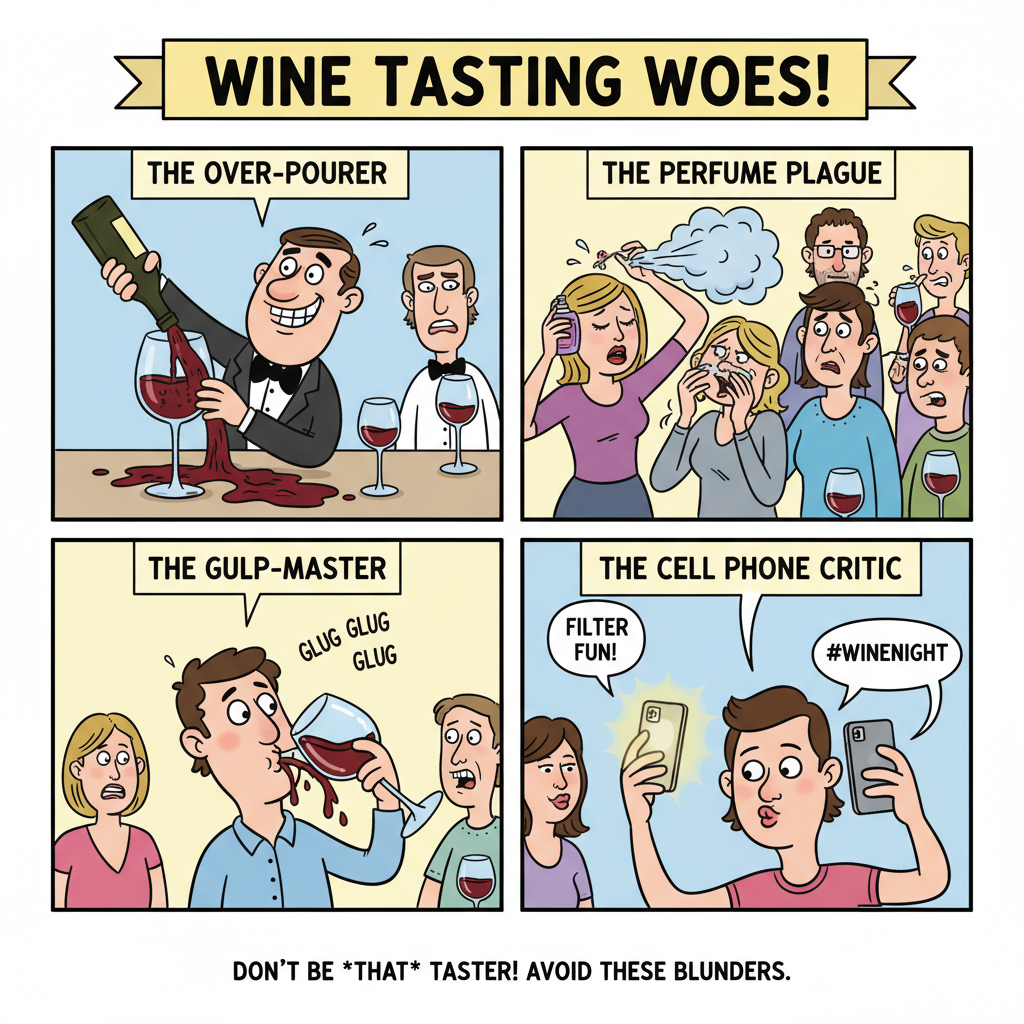
One of the most frequent missteps is not recognizing your personal limits during a tasting. Wine tasting is about appreciation and discovery, not consumption. When you overindulge, you lose the ability to discern subtle flavor notes and aromas that make each wine unique.
Pace yourself throughout the tasting. Use the provided spittoons without hesitation—professional tasters rely on them regularly. This practice allows you to sample more wines while maintaining clarity and respect for the craft.
Rushing Through the Experience
Many visitors make the mistake of hurrying through their tastings, treating them like a checklist rather than an immersive experience. Taking your time to savor each pour allows you to fully appreciate the wine’s characteristics and the stories behind them.
Engaging thoughtfully with each wine also shows respect for the winery staff who have carefully curated the tasting. Missing out on the experience by rushing means you lose the opportunity to learn and discover your true preferences.
Making Disparaging Remarks
Refrain from making negative or critical comments about the wines, especially in a loud or dismissive manner. Not every wine will suit your palate, and that’s perfectly acceptable. However, openly criticizing wines can offend both the staff and fellow guests who may be enjoying those selections.
If a wine doesn’t appeal to you, simply move on to the next pour or politely ask questions to understand the wine better. This approach demonstrates maturity and respect for the winemaking process. Remember that proper tasting room behavior creates a welcoming environment for everyone.
Ignoring Reservation Times and Schedules
Arriving late or overstaying your scheduled time disrupts the flow of the tasting room and affects other guests’ experiences. Wineries often operate on tight schedules to accommodate multiple groups throughout the day.
Respect the time allocated for your visit. If you’re running late, call ahead to inform the winery. This courtesy allows staff to adjust accordingly and ensures you still receive quality attention during your tasting.
Wearing Strong Fragrances
Applying heavy perfumes or colognes before a wine tasting interferes with your ability—and others’ ability—to smell the wine’s bouquet. Aroma is a critical component of wine appreciation, and strong scents can overpower the delicate notes in each glass.
Opt for unscented or lightly scented personal care products on tasting days. This consideration enhances everyone’s sensory experience and demonstrates your understanding of winery etiquette tips.
By avoiding these common mistakes, you’ll create more meaningful connections with the wines you taste and the people who craft them. Each visit becomes an opportunity to deepen your appreciation and build lasting relationships with your favorite wineries.
Sources
- No sources available.
Conclusion
Mastering wine tasting etiquette transforms every winery visit from a simple outing into a meaningful cultural exchange. By following the tasting room behavior guidelines we’ve explored—from arriving punctually and engaging respectfully with staff to savoring wines thoughtfully and avoiding common pitfalls—you create a positive atmosphere that benefits everyone present.
These winery etiquette tips aren’t just rules to memorize; they’re pathways to deeper connections with the wines you taste and the people who craft them. When you hold your glass by the stem, take time to appreciate each pour, and engage with genuine curiosity, you honor the artistry behind every bottle.
Reflecting on my own journey through Tuscany’s hidden gem wineries, I’ve found that the most memorable tastings came from embracing these practices wholeheartedly. The conversations with passionate vintners, the stories behind each vintage, and the respect shared in those intimate tasting rooms created experiences far richer than the wines themselves.
As you plan your next winery adventure, carry these principles with you. Practice moderation, ask thoughtful questions, and remember that your behavior shapes not only your own experience but that of fellow wine enthusiasts around you. The wineries that welcome you with open doors and carefully curated tastings deserve your respect and attention.
Whether you’re exploring California’s renowned wine regions or discovering boutique vineyards off the beaten path, good etiquette opens doors to exclusive tastings, insider recommendations, and lasting relationships with winemakers. Start practicing these techniques today, and watch how they elevate every glass you raise.
For more expert guidance on enhancing your wine experiences, explore our comprehensive guide to wine tasting etiquette and discover the stories waiting in every bottle.
Sources
- No sources available.