Napa Sonoma Travel Guide: Planning Your Perfect Trip
Introduction
Planning a Napa and Sonoma wine country trip is like crafting the perfect blend—it takes the right mix of structure and spontaneity. After years of guiding visitors through these valleys, I've seen how a little upfront planning transforms a good trip into an unforgettable experience. These neighboring regions pack completely different personalities into their rolling hills, and knowing how to navigate both is your secret weapon.
Napa Valley brings the polish—think prestigious estates, Michelin-starred dining, and that iconic valley floor drive where every turn reveals another architectural stunner. Sonoma County counters with a more laid-back vibe, sprawling across diverse microclimates from the Russian River to the Sonoma Coast. The beauty? You don't have to choose. With smart planning, you can taste your way through both regions and catch their unique rhythms.
Timing matters more than most first-timers realize. If you're eyeing 2026, events like the BottleRock Vineyard Escape from May 22-24 or the North Coast Wine and Food Festival on June 13 can anchor your itinerary around something truly special. The Cookout at the Vineyard runs June 11-13, offering a three-day celebration that blends exceptional wine with meaningful culinary connections across various Sonoma County wineries.
The key to planning a Napa and Sonoma wine country trip isn't cramming in maximum wineries—it's curating experiences that match your taste. Whether you're chasing cult Cabernets, cool-climate Pinots, or that perfect hillside view with a glass in hand, the planning process should feel as enjoyable as the trip itself. For a deeper dive into regional attractions, check out our guide on things to do in Napa Valley to complement your winery visits.
Let's break down exactly how to turn your wine country dreams into a concrete, stress-free itinerary that captures the best of both valleys.
What Makes Planning a Napa and Sonoma Wine Country Trip Challenging?
Planning a Napa and Sonoma wine country trip sounds dreamy until you actually sit down to do it. Suddenly you're staring at hundreds of wineries, conflicting advice about reservations, and zero clarity on how to fit it all into a weekend without feeling rushed or missing the best spots.
The biggest headache? Figuring out which wineries actually require reservations and which ones welcome walk-ins. Some tasting rooms book out weeks in advance, especially during peak season, while others are more flexible. If you show up without doing your homework, you might spend half your day calling around trying to squeeze in somewhere—anywhere—that has availability. Most wineries now strongly recommend (or flat-out require) advance bookings to ensure a seamless experience, so winging it rarely works out the way it used to.
Then there's the overwhelming choice problem. Napa Valley alone has over 400 wineries. Sonoma adds hundreds more across its distinct sub-regions. Do you focus on big-name estates or hidden gems? Cabernet-focused tastings or Pinot Noir? Food pairings or vineyard tours? Without a clear strategy, you end up either over-planning (booking six tastings in one day and hating yourself by 3 PM) or under-planning (wandering aimlessly and missing the spots you actually wanted to hit).
Logistics Can Make or Break Your Trip
Even if you nail the winery selection, there's still the question of how to get around safely. Wine country is spread out—distances between Napa, Sonoma Valley, and the Russian River can add up fast. Driving yourself means someone stays sober (not ideal when you're there to taste), and ride-sharing gets expensive when you're bouncing between multiple locations. Group tours solve the transportation issue but lock you into someone else's schedule and preferences.
The difference between a magical wine country trip and a stressful one often comes down to realistic planning and knowing when to slow down.
Accommodation decisions add another layer. Stay in downtown Napa for walkable restaurants but longer drives to wineries? Pick Healdsburg for Sonoma access but sacrifice Napa convenience? Budget-friendly spots book early, and luxury options can blow your budget before you've tasted a single glass.
Finally, there's the timing and seasonality challenge. Crush season (harvest) in fall is stunning but crowded and pricey. Summer weekends are packed with events and tourists. Winter offers deals and elbow room but some wineries scale back hours. Spring brings wildflowers and new releases but unpredictable weather. Each season has trade-offs, and most first-timers don't realize how much timing impacts their experience until they're stuck in weekend traffic on Highway 29.
The good news? All of these challenges have solutions once you know what you're working with. The key is approaching your wine country trip with a clear framework instead of just hoping it all works out. If you're looking for specific activities and attractions to build your itinerary around, check out our guide on things to do in Napa Valley for region-by-region ideas.
How Do You Plan a Napa and Sonoma Wine Country Trip?
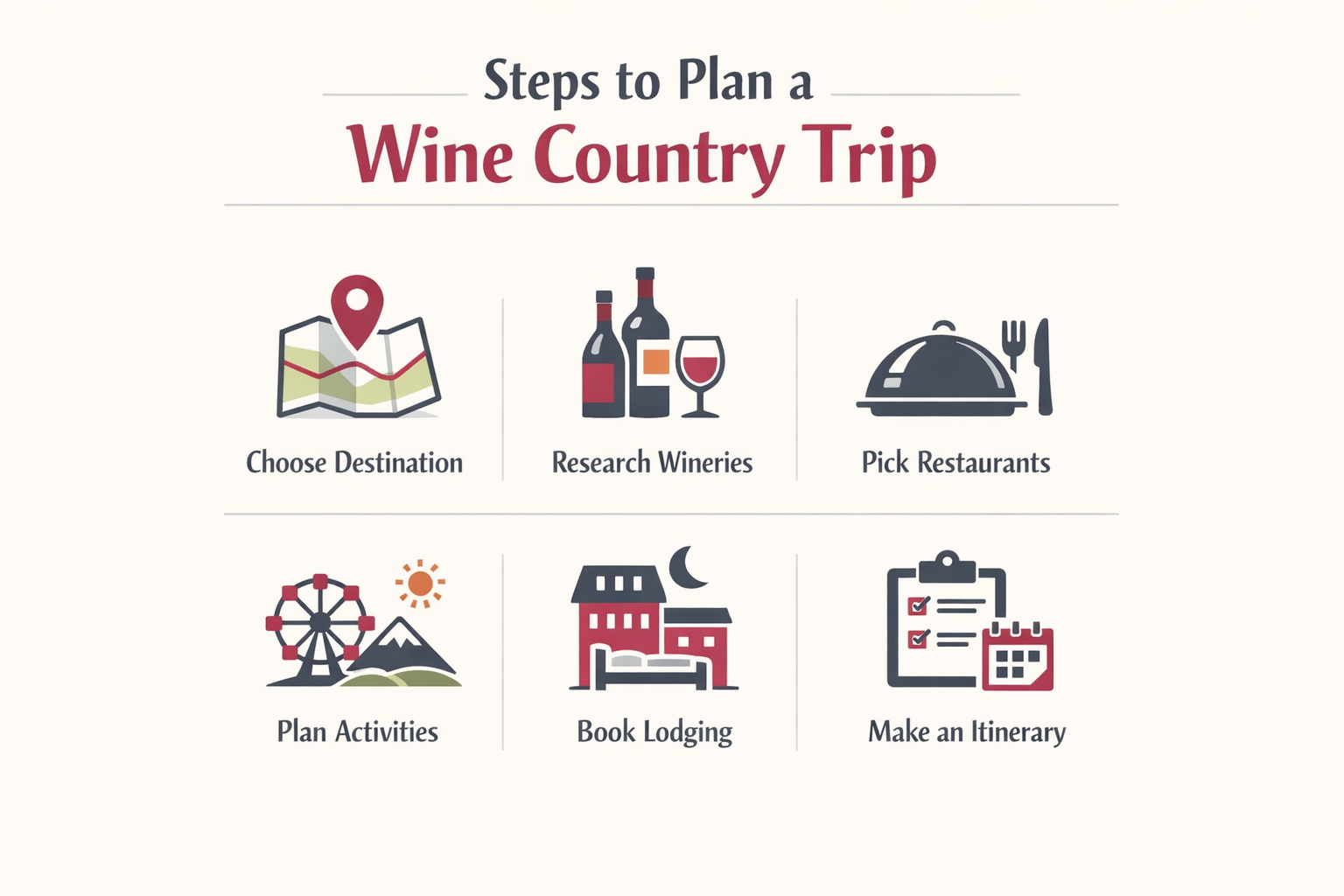
Let's break down exactly how to turn your wine country dream into a reality. The good news? With a little structure and some insider knowledge, you can build an itinerary that flows beautifully from one experience to the next.
Choose Your Home Base First
Before you book a single tasting, decide where you're staying. Your accommodation sets the tone for everything else. If you want walkable dining and nightlife, consider staying in downtown Napa or Healdsburg. Looking for vineyard views and quiet mornings? Opt for a property nestled in the valleys themselves.
Your location also determines your daily driving time. Napa Valley runs north-south and is relatively compact, while Sonoma spreads across multiple AVAs with more ground to cover. Pick a central spot that minimizes backtracking, especially if you're planning to visit both regions.
Map Out Your Winery Visits
Step 1
Research and shortlist wineries
Start by identifying what kind of experience you want. Are you after big-name estates with polished tours, or intimate family-run operations where you'll meet the winemaker? Look at tasting styles too—some wineries offer seated food pairings, others do casual bar tastings, and a few provide vineyard walks or cave tours.
Step 2
Book reservations in advance
Reservations are highly recommended to ensure a seamless experience, but walk-ins are always welcome at many spots. That said, don't count on walk-ins for your must-visit list. Popular wineries book up weeks ahead, especially on weekends. Aim for two to three tastings per day maximum—you want to savor the experience, not rush through it.
Step 3
Build in geographic clusters
Group your tastings by area to avoid zigzagging across the valley. In Napa, you might dedicate one day to Yountville and Oakville, another to St. Helena and Calistoga. In Sonoma, St. Francis Winery & Vineyards in the heart of Sonoma Valley makes an excellent anchor point for exploring that region.
Plan Your Transportation Strategy
This is non-negotiable: you need a plan for getting around safely. Wine tasting and driving don't mix, and the consequences aren't worth the risk.
Hiring a driver or joining a tour eliminates the stress entirely. Some visitors opt for scenic tuk-tuk rides through Napa's backroads—these offer vineyard lunch experiences with wine pairings and amazing views while someone else handles navigation. Others book full-day guided tours that handle all the logistics.
If you're traveling with a group, designate a rotating driver or consider renting a car with a hired driver for the day. The investment pays off in peace of mind and the freedom to actually enjoy what you're tasting. For more insights on stress-free touring options, check out Transportation Included Tours Napa: 9 Essential Stress-Free Tips.
The best wine country trips are the ones where you remember the wines, not the logistics.
Schedule Dining Reservations
Wine country dining is world-class, and the top restaurants book out fast. Once you've mapped your winery visits, lock in dinner reservations for each evening. Lunch can be more flexible—many wineries offer food pairings, or you can grab something casual in town between tastings.
Don't skip breakfast either. A solid morning meal sets you up for a day of tasting without the wines hitting too hard too fast.
Build in Downtime and Flexibility
Here's where a lot of first-timers go wrong: they pack every hour with activity. Wine country rewards a slower pace. Leave room for spontaneous stops—a farm stand, a scenic overlook, an unexpected gallery. Schedule at least one afternoon with nothing planned so you can linger somewhere you love or just relax by the pool.
Your body will thank you too. Tasting all day is more taxing than it seems, especially in warm weather. Hydrate between stops, pace yourself, and don't feel obligated to finish every pour.
Tips and Tricks for an Enjoyable Wine Country Experience
After years of guiding guests through wine country, I've picked up a few secrets that turn a good trip into an unforgettable one. The difference between feeling rushed and actually savoring your time often comes down to a handful of smart choices—and knowing when to say yes to the unexpected.
Embrace Immersive Experiences Beyond the Tasting Room
While traditional tastings are wonderful, some of the most memorable moments happen when you step outside the standard format. Look for experiences that connect you to the land and the people behind the wines. Walk-around events where you can meet winemakers and chefs create opportunities for genuine conversation—the kind where you learn why a particular vineyard site matters or what inspired a seasonal pairing.
Consider booking experiences that combine multiple senses. A vineyard lunch with chef-curated pairings, for instance, lets you taste how food and wine interact in real time while you're surrounded by the vines that produced what's in your glass. These moments stick with you long after you've returned home. For more insights on pairing principles, explore our guide on taste chemistry and wine pairings.
Time Your Visit Around Regional Events
Wine country's calendar pulses with festivals and special events that showcase what makes each season unique. Spring and early summer bring vineyard tours when the vines are lush and green. Late spring events often feature gold medal wines paired with dishes that highlight seasonal ingredients, giving you a concentrated taste of regional innovation and pride.
These gatherings aren't just about the wine—they're about the community. You'll taste alongside locals, discover smaller producers you might not find on your own, and get a genuine feel for the culinary scene. Check event calendars before you book your dates; timing your trip to coincide with a festival can add an unexpected layer of richness to your visit. Our Napa Valley events calendar breaks down what's happening month by month.
Navigate the Wine Roads Strategically
Certain routes through wine country have earned their reputation for good reason. California Highway 12, for example, winds through Sonoma Valley and the Carneros District—regions that have been at the heart of Northern California wine culture since the first plantings in 1825. Following these historic corridors connects you to the story of the place, not just the product.
Plan your route with geography in mind. Grouping wineries by area saves time and lets you experience the distinct character of each sub-region without backtracking. Morning visits tend to be quieter, giving you more one-on-one time with tasting room staff who can share insights you won't find on a label.
The best wine country days have room for spontaneity—a detour to a farm stand, an extra hour at a winery where you connect with the story, or a last-minute reservation that becomes the highlight of your trip.
Pack Smart and Pace Yourself
Bring a cooler or insulated bag if you're planning to buy bottles—wines don't like sitting in hot cars. Wear comfortable shoes; even flat tasting room floors add up over a day of standing and walking. And here's the insider tip: eat a proper breakfast and drink water between tastings. You'll taste more accurately and enjoy the day more when you're not running on empty.
Limit yourself to three or four wineries per day. Quality beats quantity every time. Rushing through six tastings leaves you exhausted and unable to remember what you loved. Three thoughtful visits give you time to ask questions, explore the grounds, and actually savor what you're drinking.
Ask Questions and Trust Your Palate
Tasting room staff genuinely want you to find wines you'll love. Tell them what you typically enjoy—or what you're curious to try—and let them guide you. Don't feel pressured to like something just because it's expensive or highly rated. Your palate is yours, and the best wine is the one you want to keep drinking.
Take notes on your phone or in a small notebook. After three wineries, bottles start to blur together. Jot down the name, what you tasted (cherry, earth, pepper?), and whether you'd buy it again. These notes become your personalized wine country map for future visits.
For more ideas on maximizing your wine country experience, check out our guide to Tasting Experiences Napa: 12 Essential Secrets for the Best.
Conclusion
Planning a Napa and Sonoma wine country trip doesn't have to feel overwhelming. With the right approach—choosing wineries that match your style, booking tastings in advance, and building in time to explore beyond the glass—you'll create an experience that's as memorable as the wines themselves. The region has been the heart of Northern California's Wine Country since the first plantings in 1825, and today it offers something for every kind of traveler, from first-time visitors to seasoned wine lovers.
Over the years, I've learned that the best trips aren't just about hitting every big-name winery. They're about finding those unexpected moments: a conversation with a passionate winemaker, a perfect pairing at a family-run vineyard, or a sunset view that makes you forget about your itinerary altogether. Wine Country rewards curiosity and flexibility, so leave room for spontaneity even as you plan.
Whether you're drawn to Napa's polished elegance or Sonoma's laid-back charm, the work you put into planning will pay off in unforgettable experiences. And remember, the wine tastes better when you're relaxed and present. So book those reservations, map out your route, and get ready to explore two of the most beautiful valleys in the world.
For more inspiration on what to see and do while you're there, check out Things to Do in Napa Valley: A Region-by-Region Guide to round out your itinerary with activities beyond the tasting room. Cheers to your next adventure in Wine Country!
FAQ
How far in advance should I book winery reservations?Book 4-6 weeks ahead for peak season (April through October). Popular boutique wineries fill up fast, especially on weekends.
How many wineries should I visit per day?Limit yourself to three or four wineries per day. This pace allows you to savor each experience, ask questions, and avoid tasting fatigue.
Do I need a car to visit Napa and Sonoma wineries?While a car provides flexibility, you'll need a designated driver or hired transportation since wine tasting and driving don't mix. Many visitors book guided tours or hire drivers for the day.
What's the best time of year to visit wine country?Each season has advantages: spring offers wildflowers and new releases, summer brings events and festivals, fall features harvest activities, and winter provides deals and fewer crowds. Choose based on your priorities.
Should I stay in Napa or Sonoma?Staying in one region simplifies logistics. Downtown Napa and Healdsburg offer walkable dining and nightlife, while valley properties provide vineyard views and tranquility. Choose based on your preferred experience.