The Best Wine Books to Actually Learn Wine
Introduction
Learning about wine shouldn't feel like memorizing a textbook. After years of leading tastings and guiding visitors through California's wine regions, I've seen countless people intimidated by wine's perceived complexity. The truth? The right book makes all the difference between confusion and confidence.
The best wine books are written for the curious—the seekers and adventurers who want to understand what they're tasting. They teach you to recognize the interplay between vineyard, winemaker, and bottle, transforming every sip into a richer experience. Whether you're planning your first visit to Napa Valley or simply want to navigate a restaurant wine list with ease, a solid foundation in wine knowledge opens doors.
This roundup focuses on books that actually teach. No coffee-table fluff, no pretentious gatekeeping. Just clear, engaging guides that cover grape varieties, regional differences, tasting fundamentals, and food pairing principles. I've personally evaluated each recommendation based on how well it delivers practical knowledge, how accessible the writing is, and whether it respects your time.
Whether you're starting from zero or looking to fill gaps in your wine education, these books will meet you where you are and take you further. Let's find the perfect guide to unlock your wine journey.
Explore The Best Wine Books to Actually Learn Wine and enhance your wine knowledge with our top picks and detailed reviews.
Our Top Picks for Wine Books
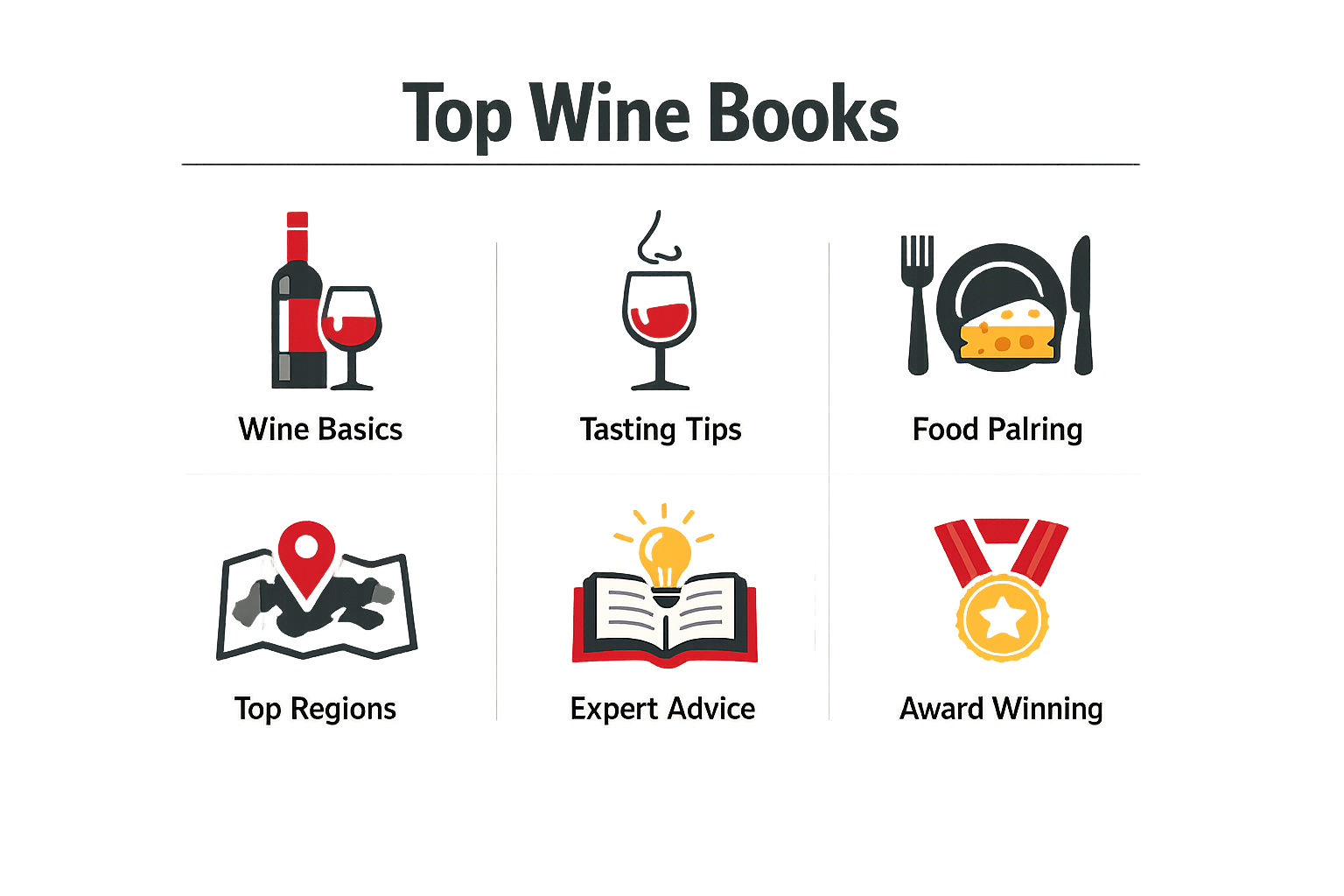
Choosing the right wine book can transform your understanding from casual sipper to confident taster. After evaluating dozens of titles, we've identified the standouts that actually teach—no pretension, just practical knowledge you can use at your next tasting or dinner party.
Our selections balance accessibility with depth, covering everything from grape fundamentals to regional nuances. Whether you're just starting out or looking to refine your palate, these books deliver the kind of insights that stick.
| Book Title | Best For | Key Strength | Award |
|---|---|---|---|
| The Wine Bible | Comprehensive learning | Encyclopedic coverage of regions and varieties | Best Overall |
| Wine Folly: The Essential Guide | Visual learners | Infographics and color-coded maps | Best for Beginners |
| The World Atlas of Wine | Geography enthusiasts | Detailed terroir maps and regional deep-dives | Best Reference |
| How to Taste | Developing your palate | Practical tasting exercises and sensory training | Best for Tasting Skills |
| The Sommelier's Atlas of Taste | Pairing guidance | Flavor profiles matched to food | Best for Food Pairing |
What Makes These Books Stand Out
Each title on our list earned its spot by doing something exceptionally well. The Wine Bible functions like a personal sommelier, walking you through every major wine region with context that makes the information memorable. Wine Folly takes complex concepts—like tannin structure or aging potential—and makes them visual, which is exactly what beginners need.
For those who learn by doing, How to Taste provides structured exercises that train your palate systematically. It's the difference between reading about wine and actually understanding what you're tasting. Meanwhile, The World Atlas of Wine offers the kind of cartographic detail that helps you grasp why a Burgundy tastes nothing like a Napa Cab, even when both are Pinot Noir.
Quick Selection Guide
If you're standing in a bookstore (or browsing online) wondering which to grab first, here's the shortcut: total beginners should start with Wine Folly for its approachable visuals, then graduate to The Wine Bible for deeper knowledge. If you're already tasting regularly and want to level up your palate, go straight to How to Taste.
For anyone planning tasting experiences in Napa or exploring wine country, The Sommelier's Atlas of Taste becomes invaluable—it'll help you articulate what you're experiencing and make smarter pairing choices at winery restaurants.
These aren't coffee-table books that look pretty but teach little. They're working references you'll return to again and again, each time discovering something new about the wine in your glass.
Detailed Reviews of the Best Wine Books
Choosing the right wine book is like picking the right bottle — it should speak to where you are in your journey and what you're ready to explore. Over the years, I've worked through dozens of wine education resources, from dense technical manuals to beautifully illustrated guides that sit on coffee tables but never get opened. The books that actually teach you something share a few traits: they respect your intelligence, they don't drown you in jargon, and they help you taste with intention rather than just memorize facts.
What makes a wine book worth your time isn't just the information it contains — it's how that information connects to the glass in your hand. The best resources help you understand why a Pinot Noir from Burgundy tastes different from one in Oregon, or how to recognize when a wine is showing its terroir versus its winemaking. They turn abstract concepts into sensory experiences you can actually identify.
What Separates a Great Wine Book from the Rest
A truly useful wine book does more than list grape varieties and regions. It teaches you how to think about wine — how to break down what you're tasting, ask better questions, and build a mental framework that grows with every bottle you open. The difference between a reference book and a learning tool is whether it changes how you taste, not just what you know.
Look for books that balance breadth with depth. A comprehensive guide should cover major wine regions and grape varieties, but it should also dig into the why behind the what. Why does Chablis taste so different from other Chardonnays? Why do some wines age gracefully while others fall apart? Books that answer these questions — and show you how to find the answers yourself — are the ones you'll return to.
Beginner-Friendly Guides That Don't Talk Down
Books aimed at beginners often make one of two mistakes: they oversimplify to the point of uselessness, or they assume you already know more than you do. The sweet spot is a guide that starts with the basics — how wine is made, what the major grapes are, how to read a label — but quickly moves into territory that challenges you. You want to feel like you're learning alongside an experienced friend, not being lectured by a sommelier who's forgotten what it's like to be confused.
Look for books that use clear language without being condescending. A good beginner guide explains technical terms when they matter but doesn't get bogged down in them. It should also acknowledge that taste is subjective — that learning wine isn't about memorizing "correct" answers but about developing your own palate and preferences. If a book makes you feel dumb for not knowing something, it's not doing its job.
For those just starting out, consider guides that organize information by what you'll actually encounter: common grape varieties, major wine regions, basic food pairing principles. Books structured around real-world scenarios — like choosing wine at a restaurant or navigating a wine shop — tend to stick better than those organized purely by geography or varietal.
Advanced Resources for Deepening Your Knowledge
Once you've got the basics down, you'll want books that go deeper into specific topics: the geology of Burgundy, the history of Champagne production, the science of oak aging. Advanced books assume you know the fundamentals and are ready to explore the nuances that make wine endlessly fascinating. These resources often focus on a single region, varietal, or aspect of winemaking, giving you the kind of detailed understanding that transforms how you taste.
The best advanced books are written by people who've spent years in the field — winemakers, Master Sommeliers, wine journalists who've tasted thousands of bottles and visited hundreds of producers. They share insights you can't get from a general guide: how a specific vintage was affected by weather, what makes one producer's style distinctive, how terroir expresses itself in the glass. These books often include interviews, tasting notes, and behind-the-scenes stories that bring the subject to life.
Every bottle speaks uniquely to its sense of place, vintage, and winemaking style — the best books teach you how to listen.
Books That Focus on Tasting and Sensory Skills
Knowing about wine and knowing how to taste wine are two different skills. Some of the most valuable books focus less on regions and varieties and more on developing your sensory awareness: how to identify aromas, recognize structural components like tannin and acidity, and describe what you're experiencing in useful terms. These books often include exercises, comparison tastings, and frameworks for breaking down a wine systematically.
Tasting-focused books help you move beyond vague descriptors like "good" or "smooth" and into more precise language that captures what you're actually experiencing. They teach you to distinguish between primary aromas (from the grape), secondary aromas (from fermentation), and tertiary aromas (from aging). They help you understand how to evaluate balance, complexity, and finish. Most importantly, they give you tools to remember what you've tasted so you can build on that knowledge over time.
If you're looking to refine your palate, seek out books that include structured tasting protocols or sensory training exercises. Some guides come with aroma kits or suggest specific bottles to taste side-by-side. The goal is to connect the abstract concepts you're reading about with concrete sensory experiences — to make the learning visceral, not just intellectual.
Regional Deep Dives and Specialty Topics
Some of the most rewarding wine books are those that focus on a single region or topic with obsessive detail. Whether it's a comprehensive guide to Bordeaux, a history of natural wine, or an exploration of indigenous grape varieties, these specialized books let you dive deep into subjects that fascinate you. They're not meant to be comprehensive overviews but rather immersive explorations that change how you think about a particular corner of the wine world.
Regional guides are especially valuable when you're planning to visit wine country or when you've developed a passion for a specific area. A good regional book includes maps, producer profiles, vintage charts, and tasting notes that help you understand the landscape and its wines. It should also provide context — the history, culture, and traditions that shape how wine is made in that place. If you've ever spent time exploring Napa Valley, you know how much richer the experience becomes when you understand the story behind each vineyard and winery.
Specialty books on topics like organic and biodynamic viticulture, wine faults, or the science of fermentation can be game-changers if you're ready to go deeper. These aren't casual reads — they're reference books you'll return to as your knowledge grows. The best ones are written by experts who can explain complex topics clearly without dumbing them down.
Visual Guides and Coffee Table Books That Teach
Not all learning happens through dense text. Some of the most effective wine books are highly visual — filled with maps, photographs, infographics, and illustrations that make complex information easier to absorb. A well-designed visual guide can help you understand wine regions at a glance, compare grape varieties side-by-side, or see how different glass shapes affect your tasting experience.
The key is finding visual books that are as substantive as they are beautiful. Plenty of wine books look gorgeous but offer little more than pretty pictures and superficial descriptions. The best visual guides use design as a teaching tool — maps that show microclimates and soil types, charts that compare tannin levels across varietals, timelines that trace the history of a region. These books make information accessible without sacrificing depth.
Visual guides work especially well for people who learn better through images than text, or for those who want a resource they can flip through casually and still pick up useful information. They're also great for sharing — you can leave them out when you're hosting a tasting and let guests explore on their own.
| Book Type | Best For | Key Strength |
|---|---|---|
| Beginner Guides | Building foundational knowledge | Clear explanations without oversimplification |
| Advanced Resources | Deep dives into specific topics | Expert insights and detailed analysis |
| Tasting-Focused | Developing sensory skills | Practical exercises and structured protocols |
| Regional Guides | Understanding specific wine areas | Context, history, and producer profiles |
| Visual Guides | Quick reference and casual learning | Maps, charts, and infographics that clarify |
How to Use Wine Books Effectively
Owning a wine book isn't the same as learning from it. The most effective approach is to read actively — with a glass in hand when possible, taking notes, and seeking out bottles that illustrate what you're studying. If a book discusses the minerality of Chablis, buy a bottle and taste it while you read that section. If it explains the difference between old-world and new-world Pinot Noir, do a side-by-side comparison.
Treat wine books as guides, not gospel. The wine world is full of debate and differing opinions, and even experts disagree on fundamental questions. Use books to build your own understanding and develop your own preferences. The goal isn't to memorize facts but to become a more thoughtful, curious taster who can articulate what you're experiencing and why you like it.
Keep a few different types of books on hand: a comprehensive reference for looking things up, a tasting guide for developing your palate, and maybe a regional deep dive for areas you're passionate about. Rotate through them based on what you're drinking and what you're curious about. Wine education is most effective when it's driven by genuine interest rather than obligation.
Buying Guide for Wine Books
Choosing the right wine book isn't just about grabbing the prettiest cover or the thickest volume on the shelf. It's about finding a resource that matches how you actually learn and what you want to get out of your wine journey. I've spent years tasting through wine regions and guiding people through their first sips, and I can tell you—the best wine books are the ones you'll actually open more than once.
Match the Book to Your Learning Style
Some of us are visual learners who need maps, charts, and color-coded diagrams. Others prefer narrative storytelling that weaves history and culture into every bottle. Think about how you absorb information best. If you're the type who learns by doing, look for books with tasting exercises, flavor wheels, or guided note-taking sections. If you want context and backstory, seek out authors who dig into the human side of winemaking—the farmers, the terroir, the traditions.
Consider Your Current Wine Knowledge
Be honest about where you're starting. Total beginner? You want clear definitions, simple grape variety breakdowns, and approachable language—no one needs to wade through technical jargon about malolactic fermentation on page three. Already comfortable with the basics? Look for books that go deeper into regional nuances, winemaking techniques, or advanced tasting methodology. The wrong level will either bore you or overwhelm you, and either way, it'll end up gathering dust.
Practical Features That Actually Matter
The best wine books include reference tools you'll return to again and again. Maps showing wine regions help you visualize where that Burgundy or Rioja actually comes from. Vintage charts give you context when you're shopping. Tasting note templates teach you how to articulate what you're experiencing in the glass. Food pairing suggestions turn theory into dinner. These aren't just nice-to-haves—they're what separate a book you read once from one that becomes a kitchen counter staple.
| Feature | Beginner Value | Advanced Value |
|---|---|---|
| Grape variety primer | Essential | Reference only |
| Regional deep-dives | Overview helpful | Critical |
| Tasting exercises | Very useful | Refinement tool |
| Technical winemaking | Skip or skim | High interest |
Format and Accessibility
Think about where you'll actually use this book. Coffee table hardcover? Great for leisurely weekend reading and impressive for guests. Compact paperback? Easier to toss in a bag when you're heading to tasting experiences in Napa or wine country. E-book? Searchable and portable, though you lose the tactile pleasure of flipping pages with a glass in hand. Some wine books are designed as workbooks with space for notes; others are pure reference. Pick the format that fits your lifestyle, not just your bookshelf aesthetic.
Author Credibility and Perspective
Look for authors with real-world wine experience—sommeliers, winemakers, wine educators, journalists who've spent years in the field. Check if they cite sources, include tasting notes from actual bottles, or acknowledge the subjectivity of wine evaluation. The best wine educators know that wine is both science and art, and they write with that balance in mind. An inviting, educational approach—much like the philosophy behind a well-curated wine library—makes all the difference in whether you'll keep learning or give up halfway through.
Budget Considerations
Wine books range from $15 paperbacks to $100+ collector's editions. The good news? Price doesn't always correlate with usefulness. A moderately priced, well-organized guide often beats an expensive coffee table book that's more photography than substance. That said, if you're serious about building wine knowledge, investing in two or three complementary books—one for reference, one for regions, one for tasting technique—gives you a more complete education than a single all-in-one volume.
How We Tested the Wine Books
Look, I've read a lot of wine books over the years—some that changed how I taste, and plenty that just gathered dust. For this roundup, I wanted to cut through the noise and find books that actually teach you something useful, not just pretty pictures of vineyards. So I built a testing framework that mirrors how real people learn about wine: starting from zero knowledge and working up to confident tasting.
Our Evaluation Criteria
Every book went through the same gauntlet. First, clarity for beginners—could someone who's never swirled a glass understand the foundational concepts without a sommelier standing over their shoulder? I flagged books that assumed too much prior knowledge or buried key ideas in jargon.
Next, practical application. The best wine education happens with a glass in hand, so I prioritized books that give you actionable tasting exercises, food pairing frameworks, or region-specific guidance you can use immediately. Books that were all theory and no practice got dinged.
Depth without overwhelm was the third pillar. Wine is an enormous subject—grape varieties, regions, winemaking techniques, history, chemistry. Great books find the sweet spot: enough detail to satisfy curiosity without drowning you in minutiae. I tested this by reading each book in two-hour blocks and noting when my attention wandered or when I felt genuinely excited to try a new wine.
Finally, I looked at long-term value. Does this book hold up after the first read? Will you pull it off the shelf when you're planning a trip to wine country or trying to decode a restaurant list? Reference-quality books scored higher than one-and-done reads.
Testing Process
I approached each book as if I were teaching a friend who'd just discovered they like wine and wants to understand why. I read cover-to-cover, took notes on structure and pacing, and tested exercises where provided. For tasting guides, I worked through them with actual wines—pulling bottles that matched the book's examples and seeing if the described characteristics held up.
I also cross-referenced technical claims against current industry standards. Wine knowledge evolves—winemaking techniques change, regions gain or lose prominence, and scientific understanding deepens. Books that felt stuck in the past or presented outdated information as gospel didn't make the cut.
Another key test: readability on a second pass. After finishing each book, I'd jump to a random chapter a week later. Could I drop in and extract value without rereading everything? The best books work both as linear reads and as references you can dip into when you need specific information.
A wine book earns its place when it makes you a more confident taster, not just a more informed reader.
Real-World Validation
Here's where it got interesting. I took recommendations from each book—specific wines to try, regions to explore, tasting techniques to practice—and road-tested them. Did the Burgundy primer actually help me understand the difference between Gevrey-Chambertin and Chambolle-Musigny? Could I use the food pairing principles at an actual dinner party without embarrassing myself?
I also considered accessibility. Not everyone has access to rare vintages or obscure appellations. Books that focused exclusively on high-end, hard-to-find wines scored lower than those that balanced aspirational content with everyday drinking guidance. The goal is to build knowledge you can apply whether you're shopping at a corner store or a specialty importer.
The books that made our final list passed all these tests—they teach clearly, apply practically, offer lasting value, and hold up under real-world use. They're the ones I'd hand to someone serious about learning wine, knowing they'd come back with better questions and a more refined palate. If you're looking for more ways to deepen your wine knowledge beyond books, check out Tasting Experiences Napa: 12 Essential Secrets for the Best for hands-on learning opportunities in wine country.
Frequently asked questions
What's the best wine book for absolute beginners?
If you're brand new to wine, you want something that doesn't assume you know the difference between Burgundy and Bordeaux. Look for books with clear visuals, simple explanations of grape varieties, and practical tasting notes. The best beginner books skip the pretentious jargon and focus on building your confidence—think "here's how to taste" rather than "here's why you're wrong."
Books with maps, flavor wheels, and food pairing suggestions are especially helpful when you're starting out. You'll learn faster when you can see the regions, taste the differences, and try pairing what you drink with what you eat.
How do I choose a wine book that matches my learning style?
Some people want encyclopedic references they can flip through; others prefer narrative-driven guides that tell the story behind the wine. If you're a visual learner, go for books with lots of photos, maps, and infographics. If you learn by doing, pick a book that includes tasting exercises or suggests specific bottles to try.
Think about how you actually use books. Do you read cover-to-cover, or do you jump around looking for answers? Reference-style books work great for the latter, while structured courses suit readers who want a clear path from chapter one to the end.
Can I really learn wine from a book, or do I need to take classes?
Books are fantastic for building foundational knowledge—grape varieties, regions, winemaking techniques, and tasting vocabulary. They're also way more affordable than formal classes and let you learn at your own pace. That said, books can't replicate the experience of tasting with an expert who can guide your palate in real time.
The best approach? Use books to build your framework, then taste as much as you can. Join a local wine group, visit tasting rooms, or set up flights at home. Just like an enoteca serves as a wine library where you can sample and learn, books give you the context to make those tastings more meaningful.
Are wine books outdated, or do they stay relevant?
The fundamentals don't change. Grape varieties, classic regions, and tasting techniques are as relevant today as they were decades ago. What does shift is the wine industry itself—new regions emerge, climate change affects harvests, and winemaking trends evolve.
Look for books published within the last five to ten years if you want current information on emerging regions or natural wine movements. For timeless knowledge—like how to taste, the history of Champagne, or the structure of Bordeaux—older classics still hold up beautifully.
How many wine books should I own?
You don't need a library. Start with one solid all-around guide that covers the basics, then add specialized books as your interests develop. If you fall in love with Italian wines, grab a regional deep-dive. If you're obsessed with pairing food and wine, add a book focused on that.
Three to five well-chosen books will cover most of what you need. Beyond that, you're collecting for the joy of it—which is perfectly fine if you're the type who loves having references on hand.
What should I look for in a wine reference book?
A great reference book is organized so you can find what you need fast. Look for clear indexing, regional maps, vintage charts, and producer directories. The best references balance breadth (covering lots of regions and styles) with enough depth to actually be useful.
You also want a book that's built to last—literally. If you're going to be flipping through it constantly, a sturdy binding and quality paper make a difference. And honestly? It should look good on your shelf, because you're more likely to reach for a book that feels like a pleasure to use.
Conclusion
Learning wine doesn't have to feel like memorizing a textbook or pretending to taste notes you can't actually detect. The best wine books strip away the pretense and give you real tools—how to identify what you're tasting, why certain regions produce certain styles, and how to trust your own palate instead of parroting someone else's tasting notes. Whether you're just starting out or deepening knowledge you've already built in the glass, the right book meets you where you are and moves you forward without the fluff.
Over the years, I've watched countless students transform from nervous first-timers into confident tasters, and it almost always starts with one good book that clicks. The curious seekers, the adventurers—those are the people who get the most out of wine education, because they're willing to explore beyond the label and into the story behind the bottle. That curiosity is what makes wine endlessly fascinating, and a solid foundation in grape varieties, regions, and tasting technique turns every glass into a conversation instead of a guessing game.
If you're ready to take your wine knowledge beyond the tasting room, pick one of the books from this guide and start reading. Pair it with real-world exploration—visit Napa Valley's best tasting experiences or dive into a few bottles at home with intention. Wine rewards the effort you put in, and the best education is the one that gets you excited to open the next bottle and see what you notice this time. Cheers to learning something new with every pour.