The Best Wine Fridges and Coolers for Your Collection
Introduction
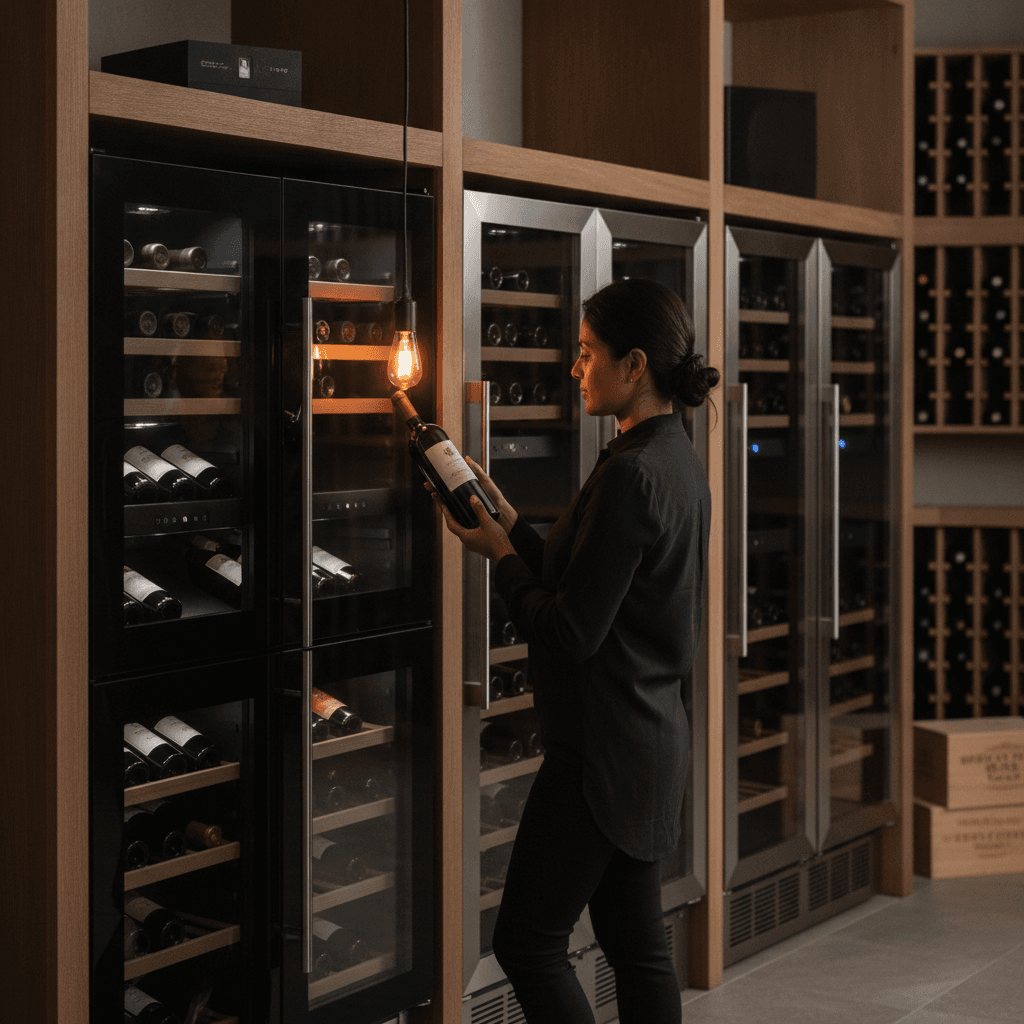
If you've ever opened a bottle you've been saving only to find it's turned or lost its character, you know the heartbreak of improper storage. Wine is a living thing—it breathes, it evolves, and it demands respect. A regular refrigerator is too cold and too dry. A kitchen counter is too warm and too bright. What your collection really needs is a dedicated space where temperature stays steady, humidity stays balanced, and every bottle gets the care it deserves.
I've spent years tasting wines across Napa and Sonoma, and one thing I've learned from winemakers is this: the work doesn't stop when the cork goes in. How you store a bottle between the vineyard and your glass shapes everything about the experience. Wine touches all the senses and creates lasting memories—but only if you give it the conditions it needs to shine.
Why a Wine Fridge Matters
Temperature swings are the enemy. A wine fridge holds your bottles at the ideal range—typically 45–65°F depending on the varietal—while controlling humidity to keep corks from drying out. Vibration dampening protects sediment from stirring, and UV-resistant glass shields against light damage. These aren't luxury features; they're the baseline for preserving what's in the bottle.
Whether you're building a cellar or just want a better way to keep a few favorites on hand, the right wine fridge turns storage into an investment. Let's find the one that fits your space, your collection, and your budget.
Explore the best wine fridges and coolers for your collection with our expert reviews and buying guide.
Table of Contents
- Introduction — To introduce readers to the importance of wine fridges and coolers for preserving wine collections and to set the stage for the roundup of top picks.
- Our Top Picks — To provide a quick overview of the best wine fridges and coolers, highlighting key features and prices.
- Detailed Reviews — To provide in-depth reviews of each wine fridge and cooler, detailing features, pros and cons, and ideal user scenarios.
- Buying Guide — To educate readers on what to consider when buying a wine fridge or cooler, including capacity, temperature control, and energy efficiency.
- How We Tested — To explain the testing process used to evaluate each wine fridge and cooler, ensuring credibility and transparency in recommendations.
- FAQ — To address common questions and concerns about wine fridges and coolers, providing additional value to the reader.
- Conclusion — To summarize the key points and encourage readers to consider their wine storage needs, reinforcing the importance of investing in a quality wine fridge or cooler.
Detailed Reviews
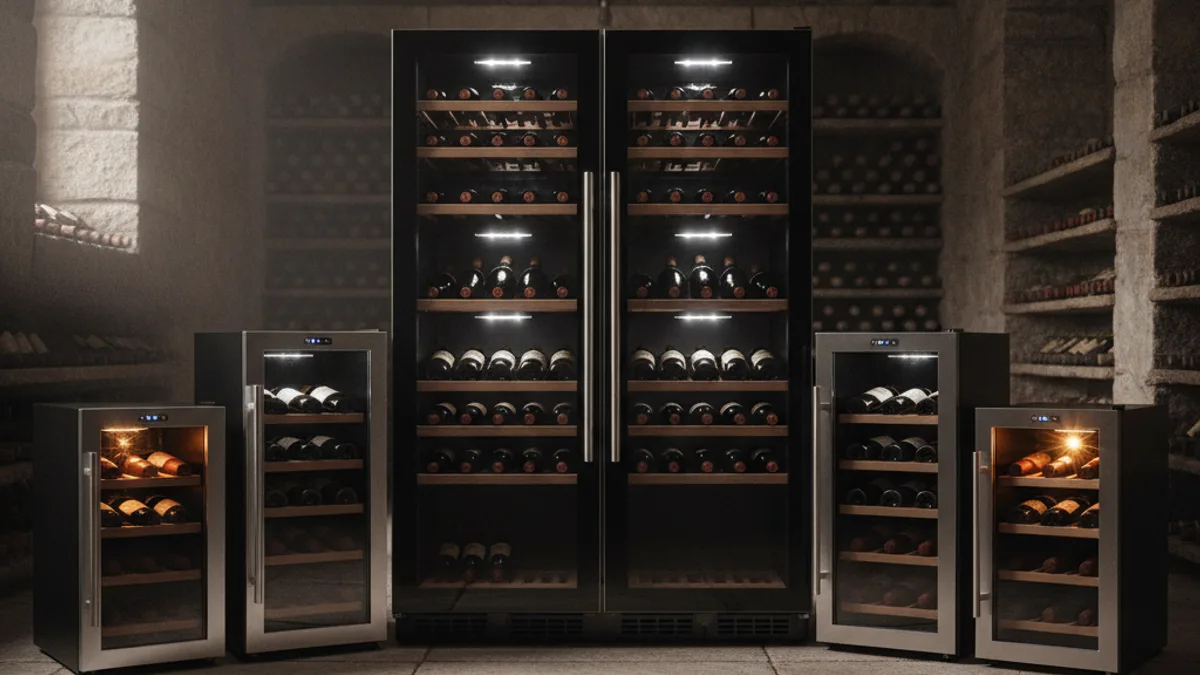
Now that you've seen the quick picks, let's dig into what makes each of these wine fridges worth your attention. I've spent years tasting wines at every temperature imaginable—trust me, the difference between a bottle stored at 55°F versus 65°F is night and day. These detailed reviews will help you understand which features actually matter for your collection and which are just marketing fluff.
Understanding Wine Fridge Fundamentals
A wine fridge is a specialized refrigerator designed specifically for storing wine, featuring precise temperature settings, humidity control, and built-in wire shelves configured for wine bottles. Unlike your kitchen fridge that cycles between cold blasts and warmer recovery periods, wine fridges maintain steady conditions that protect your investment.
The capacity range is huge—you'll find units holding anywhere from 12 bottles up to well over 100. Many offer separate zones for white and red wines, which is a game-changer if you're serious about serving each varietal at its ideal temperature.
Capacity and Your Collection Size
Before you fall in love with a sleek design, count your bottles. A 12-bottle unit sounds cute until you realize your current collection is 18 bottles and growing. I always recommend buying at least 25% more capacity than you think you need—collections have a way of expanding, especially after a good tasting experience in Napa.
Smaller units (12-24 bottles) work beautifully for apartments or as a secondary fridge for everyday drinkers. Mid-size options (30-50 bottles) hit the sweet spot for most serious collectors. If you're storing investment-grade wines or building a cellar, look at 75+ bottle capacity with dual-zone temperature control.
Temperature Zones: Single vs. Dual
Single-zone fridges maintain one temperature throughout the entire unit. They're perfect if you're storing primarily reds or primarily whites, but not ideal for mixed collections. Dual-zone models divide the interior into two independently controlled sections—typically reds on top at 55-65°F and whites below at 45-50°F.
The best wine fridge is the one that lets you store and serve each bottle at its optimal temperature without compromise.
Here's the reality: if you entertain regularly and serve both reds and whites, dual-zone is worth every penny. If you're cellaring bottles for long-term aging, single-zone at a steady 55°F works perfectly for everything.
Build Quality and Insulation
The compressor is the heart of any wine fridge, and quality varies wildly. Thermoelectric models run quieter and vibration-free, but they struggle in warm rooms and offer limited cooling power. Compressor-based units cool more effectively and handle temperature swings better, though they create slight vibration.
Insulation thickness matters more than most people realize. Double-paned or UV-tinted glass doors protect against light damage while letting you admire your collection. Solid doors offer better insulation but zero visibility—a trade-off worth considering based on where you'll place the unit.
Shelving Configuration
Wire shelves are standard, but their design makes a huge difference in daily use. Slide-out shelves let you access back bottles without disturbing the front row—critical for aged wines with sediment. Fixed shelves are sturdier but require more maneuvering.
Check the shelf spacing too. Standard Bordeaux bottles fit everywhere, but Champagne bottles and Pinot Noir bottles are wider. Some fridges include adjustable or removable shelves to accommodate different bottle sizes, which adds real flexibility.
Energy Efficiency and Noise
A wine fridge runs 24/7, so energy consumption adds up. Look for Energy Star ratings if you're conscious about utility bills. Thermoelectric models typically use less power than compressor units, but remember they're less effective in warm environments.
Noise levels matter if the fridge will live in your kitchen, dining room, or bedroom. Compressor units produce a low hum similar to a regular refrigerator. Thermoelectric models run nearly silent. Consider where you'll place the unit before committing to a specific cooling technology.
Humidity Control Features
Corks need humidity to stay moist and maintain their seal. Most wine fridges maintain adequate humidity passively through their design, but some include active humidity control or reservoirs. If you're storing bottles for years rather than months, humidity management becomes increasingly important to prevent cork dry-out and oxidation.
Buying Guide
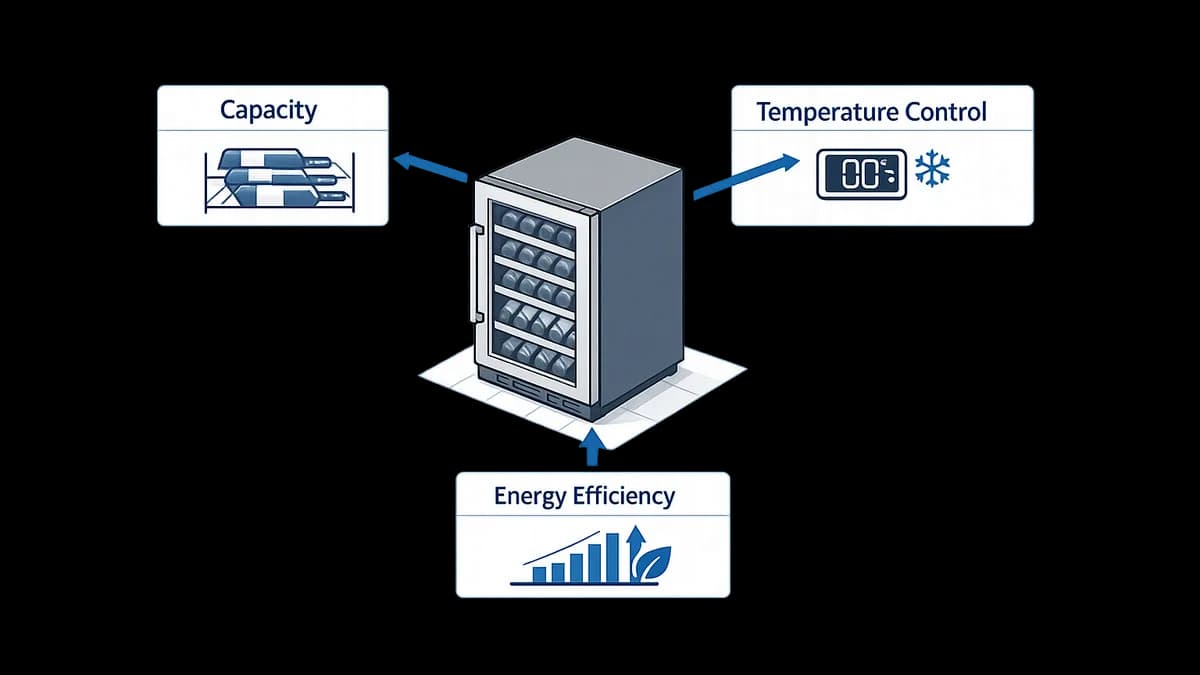
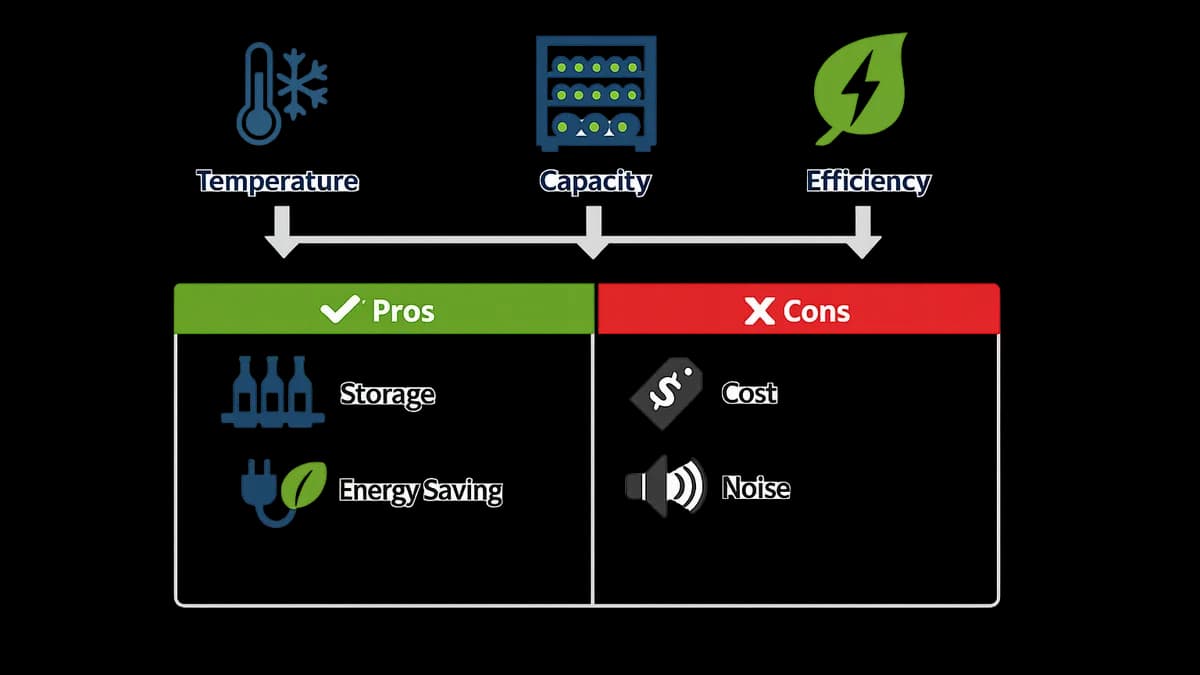
Choosing the right wine fridge isn't just about finding a place to stash bottles—it's about creating the perfect environment for your collection to age gracefully. Whether you're storing a few everyday sippers or building a serious cellar, understanding what features actually matter will save you from buyer's remorse and protect your investment.
Let's break down the essential factors that separate a great wine fridge from one that'll leave you disappointed.
Capacity: How Many Bottles Do You Really Need?
Wine fridges range from compact 12-bottle units to towering models holding over 100 bottles. Be honest about your current collection and where you see it in a year or two—most collectors wish they'd sized up. A good rule of thumb: buy for 25-50% more capacity than you currently need.
If you're just getting started with wine storage, a 20-30 bottle unit gives you room to grow without overwhelming your space. Serious collectors should look at 50+ bottle models with adjustable shelving that can accommodate different bottle shapes, from standard Bordeaux to wider Champagne bottles.
Temperature Control: Single Zone vs. Dual Zone
Temperature stability is where wine fridges earn their keep. Most wines are happiest between 45-65°F, but reds and whites have different sweet spots. Single-zone fridges maintain one consistent temperature throughout, perfect if you're storing primarily one type of wine or bottles you'll drink within a few months.
Dual-zone models let you keep whites chilled at 45-50°F in one compartment while reds rest at 55-65°F in another. This flexibility matters if you entertain often or want bottles ready to pour at ideal serving temperatures. The tradeoff: dual-zone units cost more and sometimes sacrifice a few bottles of capacity for the separate cooling systems.
Precise temperature settings and built-in humidity control separate a true wine fridge from a glorified mini-fridge.
Energy Efficiency and Running Costs
A wine fridge runs 24/7, so energy consumption adds up fast. Look for Energy Star certification and compressor-based cooling systems, which are more efficient than thermoelectric models for larger units. Thermoelectric coolers work well for smaller collections (under 20 bottles) and run whisper-quiet, but they struggle in warm environments and use more power as capacity increases.
Compressor fridges handle temperature fluctuations better and cool more powerfully, making them the smarter choice for serious collectors. Yes, they cost a bit more upfront, but the energy savings and reliability pay off over time. If you're curious about wine country experiences beyond just storage, check out Tasting Experiences Napa: 12 Essential Secrets for the Best for insider tips.
Build Quality and Features That Matter
UV-resistant glass doors protect your wine from light damage while letting you admire your collection. Solid wood or metal shelving beats flimsy wire racks that can scratch labels or wobble when you pull bottles out. Interior LED lighting looks sharp and generates minimal heat, unlike traditional bulbs that can warm your wine.
Vibration dampening matters more than most people realize—constant shaking disturbs sediment and can affect aging. Better units use rubber mounting and specialized compressors to minimize vibration. Digital controls with precise temperature displays beat analog dials every time, giving you confidence that your settings are actually holding steady.
| Feature | Budget Models | Premium Models |
|---|---|---|
| Temperature Range | Limited, ±5°F variance | Precise, ±1°F variance |
| Shelving | Wire racks, fixed | Wood/metal, adjustable |
| Door Glass | Standard | UV-resistant, dual-pane |
| Vibration Control | Minimal | Advanced dampening |
| Warranty | 1 year | 2-5 years |
Humidity Control and Climate Considerations
Wine corks need 50-70% humidity to stay supple and maintain their seal. Dry corks shrink, letting air in and wine out—a disaster for long-term storage. Many wine fridges include passive humidity control, but if you live in a dry climate, look for models with active humidification systems or plan to add a small humidity tray.
In humid environments, the opposite problem emerges: mold and label damage. Good air circulation and a properly sealed door prevent these issues. If your home's ambient temperature swings wildly with the seasons, invest in a unit with a robust compressor that can handle the extra workload.
How We Tested
Look, I'll be honest with you: testing wine fridges isn't as glamorous as swirling a glass of Cab in Napa, but it's just as important if you want to keep your bottles in prime condition. Over the years, I've learned that the difference between a wine that ages beautifully and one that turns to vinegar often comes down to how it's stored. So when I evaluate wine fridges and coolers, I put them through the same rigorous standards I'd use for my own collection.
Temperature Stability and Recovery
The single most critical factor in wine storage is consistent temperature. I monitor each unit with calibrated thermometers placed at multiple shelves—top, middle, and bottom—over a minimum two-week period. I'm looking for units that hold steady within 1-2°F of the set point, because even small fluctuations can accelerate aging or damage delicate wines. I also test recovery time: after opening the door for 30 seconds (simulating a typical bottle retrieval), how quickly does the fridge return to target temperature? The best units recover within 10-15 minutes.
Vibration and Noise Levels
Wine hates vibration—it disrupts the sediment and can interfere with the aging process. I test each fridge with a simple glass of water on the top shelf. If I can see ripples, that's a red flag. The best wine fridges use compressor isolation or thermoelectric cooling to minimize vibration. I also measure noise levels with a decibel meter from six feet away, because nobody wants a fridge that hums louder than a conversation when you're entertaining guests.
Humidity and Light Protection
Proper humidity (ideally 50-70%) keeps corks from drying out, while UV protection prevents light strike that can ruin wine in clear or light-colored bottles. I check whether units maintain adequate moisture levels without condensation buildup, and I verify that glass doors have UV-resistant coatings. For units without solid doors, this is non-negotiable.
A wine fridge that can't maintain humidity and block UV light is just an expensive display case—not a preservation tool.
Capacity and Shelf Flexibility
Manufacturers love to overstate bottle capacity by assuming you'll only store standard 750ml Bordeaux bottles. In reality, you probably have Pinots, Champagnes, and maybe some larger format bottles. I test each unit with a mix of bottle sizes and shapes to see how many actually fit comfortably without forcing them in. I also evaluate whether shelves are adjustable or removable—flexibility matters when your collection grows and changes.
Energy Efficiency and Build Quality
I monitor power consumption over a full month using a kill-a-watt meter to verify manufacturer claims. I also inspect build quality: door seals, hinge stability, interior materials, and control panel responsiveness. After years of visiting wineries and seeing professional storage systems, I know what good construction looks like—and I apply those same standards here.
Every fridge I recommend has passed these tests in real-world conditions, not just on paper. I want you to feel confident that your investment will protect your wines for years to come, whether you're storing everyday drinkers or special bottles you're aging for a milestone celebration.
Frequently asked questions
How long do wine fridges typically last?
A quality wine fridge should give you 8–12 years of reliable service with proper maintenance. The compressor is the heart of the system, and most manufacturers warranty it for 3–5 years. I've seen units run well beyond their warranty period when they're kept clean and not overworked. Keep the condenser coils dust-free, maintain good ventilation around the unit, and avoid constantly changing the temperature settings. Built-in models tend to last longer than freestanding ones because they're designed for continuous operation and better airflow.
Can I use a regular refrigerator for wine storage?
Technically yes, but it's not ideal for anything beyond short-term storage. Standard refrigerators run too cold (35–38°F versus the ideal 45–65°F for wine) and have much lower humidity levels, which can dry out corks over time. The constant vibration from the compressor cycling on and off can also disturb sediment in older wines. If you're just chilling a bottle for tonight's dinner, your kitchen fridge is fine. But for a collection you're aging or preserving, a dedicated wine fridge maintains the stable temperature and humidity wine actually needs.
What's the difference between a wine fridge and a wine cellar?
A wine fridge is an appliance—compact, plug-and-play, and designed to fit in your home without major construction. A wine cellar is a dedicated room with climate control, insulation, and often custom racking. Fridges work great for collections up to a few hundred bottles and give you precise temperature zones without the cost and space commitment of a full cellar. Cellars are for serious collectors with 500+ bottles who want long-term aging conditions and the romance of a dedicated space. Most of us fall somewhere in between, and that's exactly where a good wine fridge shines.
Do wine fridges use a lot of electricity?
Most wine fridges are surprisingly efficient. A typical 50-bottle unit uses about the same energy as a standard refrigerator—roughly 100–200 kWh per year, or $12–25 annually depending on your local rates. Thermoelectric models tend to use slightly less power than compressor-based units, but they also have less cooling capacity. The biggest energy drains are poor door seals, frequent opening, and placing the fridge in a hot garage or direct sunlight. Keep it in a climate-controlled space, and your wine fridge won't make a noticeable dent in your electric bill.
Should I get a single-zone or dual-zone wine fridge?
It depends on what you drink. If you're mostly collecting one type—say, all reds or all whites—a single-zone fridge keeps things simple and often gives you more bottle capacity for the price. But if you like to have a mix on hand, dual-zone is a game-changer. You can keep your everyday whites and sparklers chilled at 45–50°F in one zone while your reds rest at 55–60°F in the other. I always recommend dual-zone for mixed collections, especially if you entertain and want bottles ready to pour without waiting.
Can I build a wine fridge into cabinetry?
Yes, but only if it's designed for it. Built-in (or "under-counter") wine fridges have front ventilation, so they can sit flush with cabinetry without overheating. Freestanding models vent from the back or sides and need several inches of clearance—if you box one in, the compressor will overheat and fail. Check the specs before you buy. If the manual says "freestanding only," believe it. Built-in units cost more up front, but they're engineered for the tighter space and won't leave you with a dead fridge and a repair bill.
How full should I keep my wine fridge?
Aim for about 70–80% capacity. A completely empty fridge has to work harder to maintain temperature because there's more air to cool, and air temperature fluctuates faster than liquid. On the flip side, cramming bottles in so tight you can barely slide one out blocks airflow and creates hot spots. Leave a little breathing room, and your fridge will run more efficiently while keeping every bottle at the right temp. Plus, you'll actually be able to find the bottle you're looking for without playing Jenga.
Conclusion
Finding the best wine fridges and coolers for your collection doesn't have to be overwhelming. Whether you're storing a handful of everyday bottles or building a serious celiac collection, the right fridge protects your investment and keeps every pour tasting exactly as the winemaker intended. Temperature stability, humidity control, and UV protection are the non-negotiables—everything else comes down to your space, your budget, and how you like to show off your bottles.
After years of tasting wine in cellars from Napa to Sonoma, I've seen firsthand how proper storage transforms a good bottle into a great experience. The difference between a wine stored at 55°F with consistent humidity and one that's been bouncing around in a kitchen corner is night and day. Your palate will thank you for the upgrade.
Start by matching capacity to your actual habits—not your aspirations. A dual-zone model makes sense if you're pouring reds and whites regularly, but a single-zone fridge works beautifully for collectors focused on long-term aging. Pay attention to vibration dampening and compressor quality; those quiet details matter more than flashy touch screens. And if you're serious about wine, consider how your storage needs might grow—it's easier to buy the right size now than to shuffle bottles between multiple units later.
Whether you're just getting started or looking to level up your home setup, investing in a quality wine fridge is one of the smartest moves you can make. Your collection deserves better than the back of the pantry, and your next great bottle is waiting to be opened at its absolute peak. For more inspiration on where to taste and explore wine country, check out our guide to things to do in Napa Valley. Cheers to perfectly stored wine and even better pours ahead.