White Wine Explained: Styles, Grapes, and Flavor Profiles
Introduction to White Wine
White wine can feel like a mystery when you're standing in the wine aisle staring at dozens of bottles with unfamiliar names. Should you grab the Chardonnay or try that Albariño? What's the difference between a crisp Sauvignon Blanc and a rich, buttery white from Burgundy? The truth is, white wine is one of the most diverse categories in the wine world, and once you understand the basics, you'll feel confident exploring everything it has to offer.
I've spent years tasting wines across different regions, and I can tell you that white wine deserves way more credit than it gets. It's not just "the other option" when you don't want red—it's a category with incredible depth, nuance, and versatility. From bone-dry styles that make your mouth water to luscious dessert wines that taste like liquid gold, white wine covers an enormous spectrum of flavors and experiences.
In this guide, we're breaking down the world of white wine into manageable pieces. You'll learn about the major grape varieties, the styles they produce, and the flavor profiles that make each one unique. Whether you're new to wine or just want to expand your white wine knowledge, you'll walk away with the tools to choose bottles you'll love and understand what makes each one special. We'll also explore how winemaking choices—like oak aging or fermentation temperature—shape the final product in your glass.
The beauty of white wine is that there's truly something for everyone. Prefer bright, zesty wines that wake up your palate? There's a white for that. Love rich, creamy textures that coat your mouth? Yep, white wine does that too. And if you're interested in exploring exceptional white wines in premier wine regions, understanding these fundamentals will make your tasting experiences so much more rewarding.
Let's dive into what makes white wine so special and how you can navigate this exciting category with confidence.
Understanding the Confusion Around White Wine
Let's be honest — standing in front of a wine shop shelf or scanning a restaurant list can feel overwhelming when you're faced with dozens of white wine options. You see names like Chardonnay, Sauvignon Blanc, Pinot Grigio, and Riesling, but what do they actually taste like? And why does one Chardonnay taste completely different from another?
The confusion starts with the fact that white wine isn't just one thing. Unlike red wine, where the grape variety often gives you a pretty reliable flavor roadmap, white wines can swing wildly based on where they're grown, how they're made, and even what the winemaker had for breakfast (okay, maybe not that last one). A crisp, citrusy Sauvignon Blanc from New Zealand tastes nothing like a buttery, oak-aged Chardonnay from California, yet they're both white wines.
Why Grape Variety Alone Doesn't Tell the Whole Story
Here's where it gets tricky: the grape is just the starting point. Two bottles of Chardonnay can taste completely different because one was aged in stainless steel tanks (bright, fruity, mineral) while the other spent time in oak barrels (creamy, vanilla, toasty). The climate matters too — cooler regions produce wines with higher acidity and lighter fruit flavors, while warmer areas give you riper, fuller-bodied wines.
Many wine drinkers assume that if they didn't like one Pinot Grigio, they won't like any of them. That's like saying you don't like chicken because you once had a dry, overcooked breast. The reality is that winemaking style and terroir (the fancy French word for "where it's from") can transform the same grape into completely different experiences.
The Label Doesn't Always Help
Wine labels can be cryptic. Some focus on the grape variety ("Sauvignon Blanc"), others emphasize the region ("Chablis" — which is actually Chardonnay from a specific part of Burgundy), and some just give you a proprietary name that tells you nothing at all. European wines tend to name themselves after places, while New World wines (think California, Australia, New Zealand) usually lead with the grape.
This inconsistency makes it hard to build a mental map of what you like. You might love a crisp Sancerre but not realize it's the same grape as that grassy Sauvignon Blanc from Marlborough. Or you might avoid Riesling thinking it's always sweet, when in fact many German and Alsatian Rieslings are bone-dry and incredibly food-friendly.
The cheapest lesson in white wine is learning that your assumptions about a grape are probably based on just one or two examples — and the category is far wider than you think.
The Sweet vs. Dry Dilemma
Ask someone why they "don't like white wine" and you'll often hear, "It's too sweet." But here's the thing: most white wines aren't sweet at all. The confusion comes from a few mass-market brands that lean into residual sugar to appeal to entry-level drinkers, giving the whole category an unfair reputation.
Dry white wines (meaning they have little to no sugar) make up the vast majority of what's available, but if you've been burned by a cloying Moscato or a syrupy white blend, you might be avoiding an entire universe of crisp, refreshing, bone-dry options. Learning to spot the difference — and knowing which grapes tend toward which style — is half the battle.
The good news? Once you understand the basic patterns of white wine styles and the grapes behind them, the confusion starts to clear. You'll stop feeling lost and start making choices based on what you actually enjoy. If you're ready to dive deeper into specific varieties and their characteristics, check out our guide to unveiling the ultimate white wines in wine country for a curated exploration of standout examples.
Steps to Explore White Wine Styles and Grapes
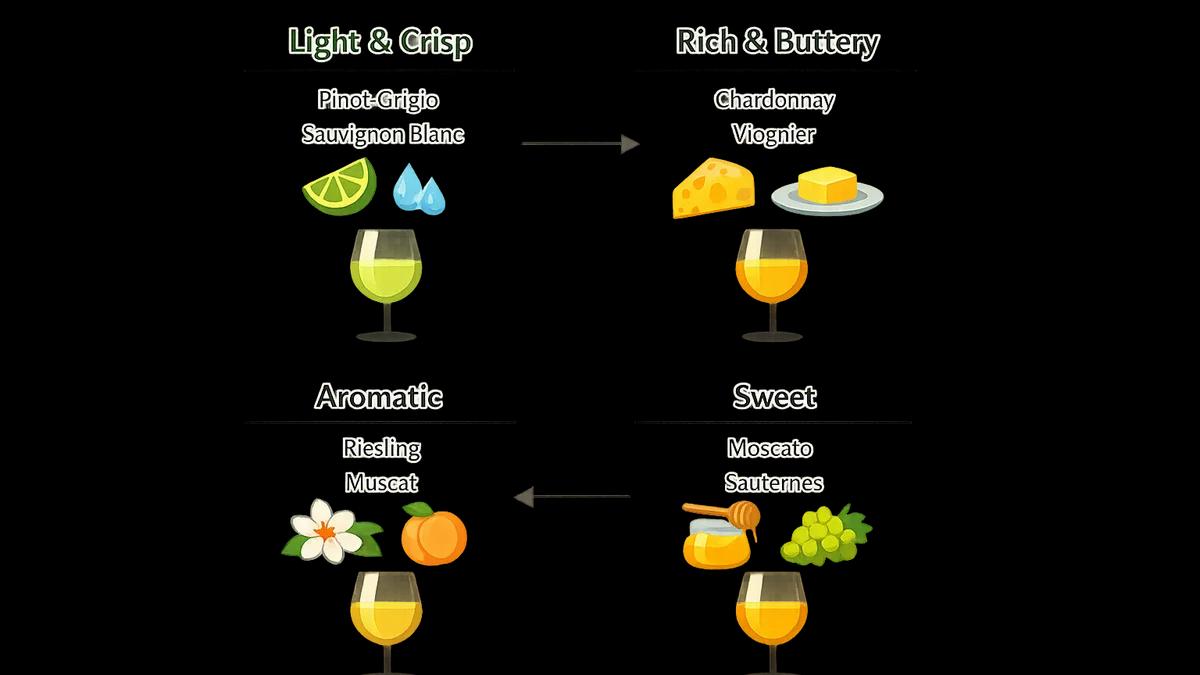
Let's break down how to actually explore white wine in a way that makes sense. Instead of feeling overwhelmed by endless options, you can approach this systematically — one style at a time, one grape at a time. Here's how I guide people through their white wine journey.
Step 1: Start with the Classic Varieties
Begin with the grapes you've probably heard of: Chardonnay, Sauvignon Blanc, and Pinot Grigio. These are your anchors. Chardonnay can range from crisp and unoaked to rich and buttery, depending on how it's made. It's incredibly versatile, which is why you'll find it everywhere from Burgundy to California.
Step 1
Taste the same grape from different regions
Grab a Chardonnay from California and one from Chablis, France. Same grape, completely different expressions. The California version tends to be fuller-bodied with tropical fruit notes, while Chablis offers minerality and green apple crispness. This single comparison will teach you more about terroir than any book.
Step 2: Explore Lesser-Known White Wine Grapes
Once you've got the classics down, branch out to grapes that don't get as much spotlight but offer incredible character. Roussanne, for example, brings rich texture and acidity that makes it perfect alongside food. Viognier offers aromatic stone fruit and floral notes that can be absolutely captivating.
Gewurztraminer is another standout — when made dry, it delivers exotic lychee and rose petal aromatics without the sweetness many people expect. These grapes show you that white wine has far more range than the usual suspects suggest.
Step 2
Map flavor profiles to your preferences
Make a simple chart: on one axis, put light-to-full body. On the other, put crisp-to-round texture. As you taste different wines, plot them. You'll quickly see patterns in what you're drawn to, which makes future selections much easier.
Step 3: Understand How Styles Differ Within Varieties
Here's where it gets interesting: the same grape can produce wildly different styles. A Chardonnay can be steel-fermented for brightness or oak-aged for creaminess. Blends add another layer — a Rhone-style white blend might combine several grapes to create something more complex than any single variety could achieve on its own.
When you see terms like "classically structured" or "less ripe," those are clues about the winemaker's approach. Less ripe grapes mean higher acidity and more savory character. More hang time on the vine means riper fruit flavors and fuller body.
Step 4: Pay Attention to Regional Expression
Where grapes are grown matters enormously. Russian River Valley, Dry Creek Valley, and Alexander Valley — all in Sonoma County — produce distinctly different expressions of the same varieties because of climate, soil, and elevation differences. Cooler regions yield more acidity and elegance; warmer spots give you riper fruit and fuller body.
If you're exploring white wines in wine country, you'll notice how producers emphasize their specific vineyard sources. That's not marketing fluff — it's the foundation of what's in your glass.
The best way to understand terroir is to taste the same grape from neighboring vineyards in a single afternoon.
Step 5: Taste with Intention and Take Notes
Don't just drink — actually taste. Look at the color (pale straw versus deep gold tells you something about age and oak). Smell before you sip (citrus? stone fruit? flowers? minerality?). Then taste: how does it feel in your mouth? Is it crisp and refreshing or rich and coating? Does the flavor linger or disappear quickly?
Keep a simple tasting journal on your phone. Note the grape, region, and what you liked or didn't. After a dozen tastings, you'll have a clear map of your preferences that makes every future wine shop visit exponentially easier.
| Grape Variety | Typical Body | Common Flavors | Best For |
|---|---|---|---|
| Chardonnay | Medium to Full | Apple, butter, vanilla | Rich dishes, creamy sauces |
| Sauvignon Blanc | Light to Medium | Citrus, grass, gooseberry | Salads, seafood, fresh cheeses |
| Viognier | Medium to Full | Peach, apricot, honeysuckle | Spicy cuisine, roasted chicken |
| Gewurztraminer | Medium | Lychee, rose, ginger | Asian dishes, aromatic foods |
| Roussanne | Medium to Full | Pear, herb, honey | Complex dishes, textured preparations |
Tips and Tricks for Enjoying White Wine
Once you've got a handle on the styles and grapes, the real fun begins — actually drinking the stuff. White wine is incredibly versatile, but a few simple tricks can take your experience from good to unforgettable. Whether you're picking a bottle for dinner or hosting a tasting at home, these tips will help you get the most out of every glass.
Choosing the Right White Wine for the Moment
Not every white wine fits every occasion. Light, crisp wines like Sauvignon Blanc or Pinot Grigio are perfect for warm afternoons or casual get-togethers — they're refreshing and easy-drinking. If you're planning a more formal dinner or want something with more complexity, reach for a Chardonnay or a rich Viognier. The key is matching the wine's body and flavor intensity to the vibe you're going for.
Don't overthink it, though. If you're unsure, ask yourself: am I looking for something bright and zesty, or something creamy and full? That simple question will steer you in the right direction every time.
Serving Temperature Makes All the Difference
Here's a mistake I see constantly: serving white wine too cold. Yes, it should be chilled, but if it's ice-cold, you're numbing all those beautiful flavors you paid for. Aim for around 45–50°F for most whites — that's about 20 minutes in the fridge after pulling it from the cellar, or 10 minutes in an ice bucket.
Lighter wines can go a bit colder, while richer, oak-aged Chardonnays actually show better closer to 50°F. If you've ever wondered why a wine tasted flat at a restaurant, it was probably served straight from a too-cold cooler.
Pairing White Wine with Food
White wine shines brightest at the table. The acid and texture in many whites make them natural partners for food, cutting through richness and highlighting flavors in ways red wines sometimes can't. Think of acid as the wine's scrubbing brush — it cleans your palate between bites and makes each taste as vivid as the first.
For seafood, go crisp and mineral — unoaked Chardonnay, Albariño, or a dry Riesling. Creamy pasta or roasted chicken? That's Chardonnay territory, especially if it's seen some oak. Spicy Asian dishes pair beautifully with off-dry Riesling or Gewürztraminer, where a touch of sweetness tames the heat without overpowering the dish.
If you're exploring wine pairings in more depth, remember that the best pairing is the one that makes both the food and the wine taste better together. Trust your palate — if it works for you, it works.
We believe that sharing a bottle of wine with friends & family, over a great meal is one of the true joys in life.
Tasting Like You Mean It
When you're tasting white wine — whether at a winery or at home — slow down and engage all your senses. Start by looking at the color: is it pale and greenish, or golden and rich? Swirl the glass to release the aromas, then take a good sniff. You'll pick up fruits, florals, maybe some oak or mineral notes.
Then taste. Let the wine sit on your tongue for a moment before swallowing. Notice the texture — is it light and crisp, or creamy and mouth-filling? Pay attention to the finish, too. Does the flavor linger, or does it disappear quickly? These details tell you a lot about the wine's quality and style.
Many wineries offer customized tasting experiences that can deepen your appreciation — from food pairings to deep dives into specific varietals. It's a great way to learn what you like and why.
Storing and Serving Leftovers
If you don't finish the bottle (it happens), white wine will keep for a few days in the fridge with a good stopper. The key is minimizing air exposure — consider investing in a vacuum pump or even just re-corking tightly. Most whites will stay fresh for 3–5 days, though delicate styles like Sauvignon Blanc may start to fade sooner.
And here's a pro move: if you have leftover white wine that's lost its sparkle, use it in cooking. It adds acidity and depth to sauces, risottos, and seafood dishes. Waste not, want not.
Conclusion: Embracing the World of White Wine
White wine doesn't have to feel like a puzzle you're trying to solve without all the pieces. Once you understand the basic styles, grape varieties, and flavor profiles, the whole experience opens up. You stop second-guessing yourself at the wine shop and start picking bottles with confidence. Whether you're drawn to the bright citrus notes of a crisp Sauvignon Blanc or the creamy richness of an oaked Chardonnay, there's a white wine that fits your palate perfectly.
The real joy comes when you share what you've learned. I've spent years tasting wines across different regions, and the moments that stick with me aren't just about the wine itself — they're about the people I've shared it with. Opening a bottle with friends over dinner, talking through what you're tasting, and discovering new favorites together makes the whole journey worthwhile. Wine touches all the senses and creates lasting memories, especially when you're not stressed about whether you're "doing it right."
We believe that sharing a bottle of wine with friends & family, over a great meal is one of the true joys in life.
Start simple: pick one style you're curious about, grab a bottle, and taste it with intention. Notice the color, the aroma, the way it feels in your mouth. Try it with different foods and see what clicks. As you build your own mental library of flavors and preferences, you'll find yourself navigating wine lists and tasting rooms with the kind of ease that only comes from hands-on experience.
White wine is meant to be enjoyed, not overthought. Trust your palate, stay curious, and don't be afraid to explore beyond your comfort zone. The best white wines in Wine Country are waiting for you to discover them — and the journey is half the fun. Cheers to finding your next favorite bottle.